

April
18, 4:30 p.m.
Free, Public Cordially Invited
In celebration of its twelfth anniversary, the UMD Baeumler-Kaplan Holocaust Commemoration Committee will feature Holocaust survivor David Gewirtzman and Rwandan refugee/survivor Eugenie Mukeshimana. The featured speakers will present a lecture titled "Holocaust and Genocide, Past and Present" on Monday, April 18 at 4:30 p.m. at UMD, in room Chemistry 200.
In conjunction with the commemorative lecture, the committee will present a documentary titled "Ghosts of Rwanda," on April 16, at 7 p.m. in UMD Bohannon Hall, room 90. The powerful documentary marks the 10th anniversary of the Rwandan genocide, a state-sponsored massacre, in which 800,000 Rwandans were methodically hunted down and murdered by Hutu extremists.
The following are personal statements of featured speakers David Gewirtzman and Eugenie Mukeshimana.
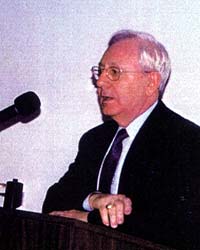
David Gewirtzman writes:
"I was born on May 16, 1928 in Losice, Poland. My father was a grain merchant, my mother a housewife. Losice had about 8,000 inhabitants, 75% of them Jews. I have two younger siblings. My parents died some years ago, my father at the age of 102.
"On September 1, 1939, the German army invaded Poland. On Saturday, September 9, our town was bombed. Fifty-five Jews were killed and 150 injured. The old synagogue was destroyed. The town was occupied several days later.
"Harassment, deprivation and persecution of the Jewish population soon followed. In spite of the difficulties, I and a number of other Jewish children managed to persevere and continue our education. In 1941 I celebrated my Bar Mitzvah in the Ghetto."
"Forewarned, we built a hiding place in the attic of our building. On August 22, 1942, the Ghetto was surrounded by an assortment of German and Polish policemen and the 8,000 Jews were led to the railway station and shipped to the extermination camp, Treblinka. My family and a few others hid in the attic. A failed attempt to escape from there landed my sister and I in jail. Two young people below our cell were shot the same night, possibly by mistake, instead of us. We were taken to a labor camp where the rest of my family joined us later."
"My sister found refuge with the same Polish policeman, who previously arrested us. My brother, at age 9, was hidden in a haystack, where he spent 22 months. Several relatives, my parents and I, were hidden under a pigsty until the summer of 1944, when liberated by the advancing Red Army. Of the 8,000 Jews in the Ghetto, 16 came back."
"I left Poland, alone, in the spring of 1945. After crossing numerous borders (illegally), I was welcomed by the Palestinian Jewish Brigade stationed in Tarvisio, Italy. Later, I joined a kibbutz near Rome where my family found me in 1946. I went back to school, graduated from an Italian Lyceum and attended the University of Rome for one year. In 1948 we arrived in the USA. I continued my education and graduated in 1954 with a degree in Pharmacy. I got married the same year. After two years in the U.S. Army (in Germany) I resumed a normal life. I owned several pharmacies, raised and educated two children and am a proud grandfather of six grandchildren."
"Since retirement in 1995, I became involved with the Nassau Holocaust Memorial and Educational Center in Glen Cove, New York. I am the chairman of the education committee and a member of the board. I lecture to high school and college students as well as adults about my experiences during the Holocaust and the lessons to be learned from it as well as the genocides that followed since then."
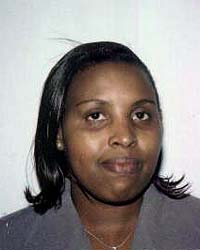
Eugenie Mukeshimana writes:
"I was born in Rwanda. My father was an elementary school teacher, then a principal of the same school in a rural village where I spend my first 15 years of life. My mother was a stay-at-home mum. I moved to Kigali (the capital city of Rwanda) at the age of 16 to attend Lycee Notre Dame des Citeaux , a Roman Catholic High School. The genocide began a few weeks before high school graduation. I was 23 years old then, married, and eight months pregnant with my first child. My husband and I were attacked and forced to flee our home. We hid in a local school the first night. With help from an old friend, a stranger family hid me; my husband was taken to a separate location. An old friend of ours helped us find families to hide us. He was later found and killed. I was discovered by the militia and taken to a local female government representative. Her daughter pleaded with her to save my life, which she did for a few days. On the night of May 8, 1994, I gave birth to my daughter, was discovered again by the militia and taken to the killing site where I was handed over to a local militia gang-leader and taken into captivity until the fall of Kigali to the Rwanda Patriotic Army. Both my child and I survived but several members, including my father and my elder sister my family were killed."
"In the aftermath of the genocide, I went back to school and got my high school diploma in Accounting. I taught myself English and got jobs with international aid agencies. My ambition to become somebody took another turn after meeting a UN Human Rights worker who shared my story with her friends around the globe, including my current host family. I came to America in December of 2001 to attend the undergraduate social work program at the College of Saint Rose in Albany, NY from which I am expected to graduate this summer. As a way of giving back to the community that has been so generous to me, I took on a new role of educating the local community about the Rwandan genocide through schools, churches, social agencies, and public libraries."
For more information on Baeumler-Kaplan Holocaust Commemoration events,
see http://www.d.umn.edu/cla/holocaust or contact Deborah Petersen-Perlman
at:
phone: 726-6849
email:
dpeters1@d.umn.edu
Choose appearance:
[ Desktop
| Mobile friendly ]
 UMD News Releases