|
Respiratory
Disease: Gases
High density confined animal feeding operations (CAFOs) are very controversial
because of odor issues and the concern over water and air contamination. In
operations of 2000-5000 animals, or even larger, farm workers can work 40-60
hours inside with constant exposure to dusts and gases. Dusts are made up of
animal dander, feces, skin, antibiotics, and feed additives that allow gases to
penetrate into the end gas exchange units of the lungs. Gases and dusts are at
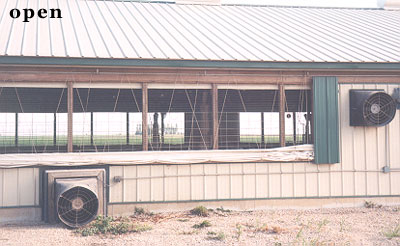
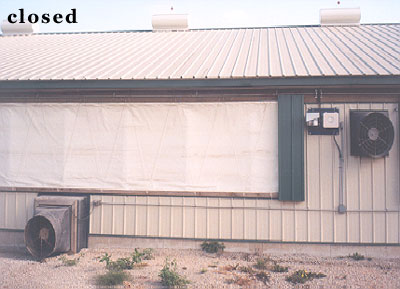
higher concentration in the winter when the sides are down to
save on heating costs.
The primary gases of concern are hydrogen sulfide, ammonia, and to a lesser degree
methane and carbon dioxide and result from the bacterial breakdown of manure.
Hydrogen sulfide can build up to toxic levels that can cause death when the manure
stored under the pits is agitated by pumping. A tip off can be dead or downed
animals in the barn. No one should enter without first checking gas levels when it
is noticed that animals are down and the pits are full or being emptied.
 Manure pits are another very dangerous source of toxic gases and lack of enough oxygen
(anoxic environment) to support human life. There have been at least 12 deaths since 1994
with 3 of the deaths in children less than 12 years old. The rescuers are at as much risk as
the person who collapses in the area because of lack of oxygen and toxic levels of
asphyxiant gases. There have been occurrences in all states and Europe, including 2
episodes involving 4 fatalities in Minnesota in 1994, where family members or co-workers
attempted to rescue the victim without adequate personal protection and also died. Toxic
levels are more likely in hot, humid summer days with little wind. No one should ever go in
a manure lagoon or pit to repair pumps without wearing a self-contained breathing apparatus
(SCBA) that is properly maintained, wear a rescue line, and have a spotter. No rescues
should be attempted without this equipment and as hard as it is, call the EMTs
and wait for them to perform the rescue.
Manure pits are another very dangerous source of toxic gases and lack of enough oxygen
(anoxic environment) to support human life. There have been at least 12 deaths since 1994
with 3 of the deaths in children less than 12 years old. The rescuers are at as much risk as
the person who collapses in the area because of lack of oxygen and toxic levels of
asphyxiant gases. There have been occurrences in all states and Europe, including 2
episodes involving 4 fatalities in Minnesota in 1994, where family members or co-workers
attempted to rescue the victim without adequate personal protection and also died. Toxic
levels are more likely in hot, humid summer days with little wind. No one should ever go in
a manure lagoon or pit to repair pumps without wearing a self-contained breathing apparatus
(SCBA) that is properly maintained, wear a rescue line, and have a spotter. No rescues
should be attempted without this equipment and as hard as it is, call the EMTs
and wait for them to perform the rescue.
|





