UMD Home > CLA > Sociology-Anthropology  > Anthropology > Tim Roufs > Peoples and Cultures of Europe
UMD   Skip to the Contents A B C D E F G H I J K L M N O P Q R S T U V W X Y Z
Week: 01 . 02 . 03 . 04 . 05 . 06 . 07 . 08 . 09 . 10 . 11 . 12 . 13 . 14 . 15 . 16

Summer 2008 Day 01 02 03 04 05 06 07 08 09 10 11 12 13 14 15

Peoples and Cultures of Europe

Saturday, 17-May-2008 03:30:58 GMT
Today in History
Today in Headlines

Word of the Day

search links page
~ Google advanced
~ Google images

search on JSTOR

Wikipedia > Europe
~ Lists and Tables
~ Maps
   ~ Europe
     ~ Central
     ~ Eastern
     ~ Northern
     ~ Southern
     ~ Southeastern
        ("Balkans")
     ~ Western

BBC News: Europe

Countries, Cultures, Regions, and Territories of Europe

CEforum    presentations schedule   topics and resources

see also
Understanding Global Cultures

Google Search: Society > Ethnicity > European
Google Search: Science > Social Sciences > Area Studies > European Studies

language dictionaries


BBC News: Europe

Eurostat -- Europa (EU)


Spring 2008 Calendar


Summer 2008 Calendar


Babel Fish Translation
~ translate this page

Tech Resources
for Students


last week
last time

next week
next time
to top of page / A/Z index   to top of page / A-Z index

Tuesday 19 February 2008
Week 05 Day 09


Announcements

  • From the e-mails of the week:

  • From Sunday's Guest Editorial in the Duluth News-Tribune, A bookworm’s case for new education strategy:

    Mark Twain changed my life. I was an 18-year-old clerk at a grocery store with no map for my future when my college freshman composition teacher distributed a list from which to choose a novel for the end-of-the-year term paper.
    Sunday, February, 17, 2008 - Duluth News Tribune - Opinion

    • A random sampling of course syllabi nationwide, including at the University of Minnesota Duluth, revealed reading assignments consisting of essays, letters, short stories, poems and book excerpts — but seldom many whole books....

      And textbook companies are more than happy to accommodate such surveys, because they can re-shuffle the collections every three years into new and expensive anthologies that students must purchase, whereas they would earn nothing from students purchasing used novels.

      But instead of sweeping surveys, core courses should be based on five to seven representative books. In American Literature II, for example, teaching books like Twain’s “Innocents Abroad” and Nathanial Hawthorne’s “Scarlet Letter,” among others, would make for more meaningful experiences.


  • KOSOVO

    As mentioned in the e-mail, the events currently underway concerning Kosovo may be some of the most important events of your life--no kidding--especially if they kick off another cold or hot war, or if they start a domino effect of Declarations of Independence for the Basques, Catalans, Walloons, Kurds, and other "Provinces" and protectorates and Russian states.  Wales and Scotland have already "devolved", and who knows what next.  And who know what will happen in the "FYRM".

    Please join Dr. Willie Henderson's, blog on "Kosovo's Contested Independence" Prof. Henderson, the Director of the Royal D. Alworth, Jr. Institute for International Studies will join us live and in person the 6th of March, and you will get to meet him and discuss some of these very issues with him.  He is most knowledgeable on international affairs, as one might expect, and is also a captivating speaker and great person.  You will see.

    Willie Henderson.


    In the meantime, have a go at his Weblog.  His other Weblogs can be found at  <http://blog.lib.umn.edu/whenders/internationalissues/>.


CEforum: Topic 4

Kosovo Declares Independence from Serbia

World split over independence

Kosovo Serbs' anger mounts

BBC photo.
BBC News

BBC photo.
Kosovo's new yellow and blue flag has been unveiled
Sunday, 17 February 2008 -- BBC News

On Sunday, 17 February 2008, Kosovo declared independence from Serbia.

See the story, "Kosovo MPs proclaim independence"
and
the latest related news items at BBC News--Europe.

An article in Sunday's Minneapolis Star Tribune noted:  "The move is expected to be quickly followed by formal recognition by the United States and many, but not all, of the European Union's member states.  Some E.U. countries, including Spain, fear that Kosovo's independence will embolden separatists elsewhere on the continent" [like, for example, the Basques and the Catalans in Spain].

Other comments/observations include...

"Serbia's [Prime Minister] denounced the US for helping create a 'false state'." .... "Serbia's Prime Minister Vojislav Kostunica blamed the US which he said was 'ready to violate the international order for its own military interests'."

"Police clash with protesters in Belgrade".

"The diplomatic gulf between Russia and many Western governments is widening with the declaration of independence by Kosovo".

"The UN Security Council went into emergency session on Sunday evening after Russia called for the United Nations to declare the Kosovo declaration illegal".

Of great concern is what might happen to the Serb minority (10%) in the newly-declared Kosovo nation.

BBC photo.
Sitting Bull

On the 19th of December 2007, the Lakota Sioux Indians in the United States declared Sovereign Nation Status
indicating, as Kosovo did just a few weeks later,
that they were now an independent nation.

See "Lakota withdraw from treaties, declare independence from U.S."
and
"Lakota Sioux Indians Declare Sovereign Nation Status".

Questions:
1. What is your opinion about the right of Kosovo to declare itself an independent nation? 
  Why?
2. What do you think the Kosovo Declaration of Independence will mean to the EU, and to international relations in general?
  Why?
3. How would you compare the Kosovo Declaration of Independence with the Lakota Sioux Declaration of Independence?
  Why?

Be sure to set your "Folder Selector"
in the main window
to the current topic

[use the “Reload/Main button" to get to the main window]

Set CEfolder to Topic 04.

REM: If you have any questions, you can post them on the CEforum
or bring them up in class


Features of the Day

  • Pick or narrow topic for Term Paper and Class Presentation

    • identify the topic, or short list of topics (1-3), that you have selected (or are thinking about) along with a one- or two- sentence statement of what you expect/hope to do with your term paper and class presentation topic

    • e-mail that to troufs@d.umn.edu

    • or drop it in your WebDrop folder at <https://webdrop.d.umn.edu>

    • be sure to include the name of the class in the e-mail

    • Due: no later than tomorrow evening

      (If you have already done this you do not need to repeat it, but do send in questions you may have about your topic)

    • class presentations start on 15 April 2008, after Exam II, Week 12 Day 23

    •  

    • Review

try the
UMD Library > Research Tools and Resources > Assignment Calculator
<http://www.d.umn.edu/lib/assign/index.phtml>

The Term Paper is due by Friday, 2 May 2008, 11:59 p.m. ,
to WebDrop
at
<https://webdrop.d.umn.edu>

( from today)

UMD Library Assignment Calculator.


Old Business

  • Europe as an ethnographic "culture area"

    • Methods: Units of analysis / cultural metaphors (slides)

      • NOTE: This information could be useful in selecting your research topic, which you should be prepared to identify next time in class
 

Assignments


Notes

  • Thursday 14 February 2008: Finished "Master Ethnographic Texts and 'Classics' in the Anthropology of Europe" (slides)
  • Tuesday, 19 February 2008: Methods: Finished Units of analysis / cultural metaphors (slides), to #96, "Units of analalysis may include a nation, the item or action itself, a "cultural metaphor"


to top of page / A/Z index   to top of page / A-Z index

Thursday 21 February 2008
Week 05 Day 10

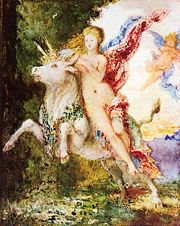
nlt 2:11 video: The Buried Mirror: The Virgin and the Bull
(59 min., 1991, VC 3933, pt. 1)


Announcements


Feature of the Day


nlt 2:11 video: The Buried Mirror: The Virgin and the Bull
(59 min., 1991, VC 3933, pt. 1)


  • Units of Analysis: Metaphor

Understanding Global Cultures: Metaphorical Journeys Through 28 Nations, Third Edition.

Understanding Global Cultures:
Metaphorical Journeys Through 28 Nations
, Third Edition

Thousand Oaks, CA: SAGE Publications, 2004.


¡Raúl R. Salinas, Presente!

¡Raúl R. Salinas, Presente!

March 17, 1934- February 13, 2008
raúlrsalinas and the Jail Machine: My Weapon is My Pen: Selected Writings
by Raúl Salinas


Old Business

  • Tuesday, 19 February 2008: Methods: Units of analysis / cultural metaphors (slides), to #96, "Units of analalysis may include a nation, the item or action itself, or a "cultural metaphor"
  • Thursday, 21 February 2008: Metaphorical analysis; The Buried Mirror: The Virgin and the Bull
 

Assignments


Notes

  • Tuesday, 19 February 2008: Methods: Units of analysis / cultural metaphors (slides), to #96, "Units of analalysis may include a nation, the item or action itself, a "cultural metaphor"

Envelope Image © 1998 - 2008 Timothy G. Roufs
Page URL: http:// www.d.umn.edu /cla/faculty/troufs/anth3635/ceweek05.html
Last Modified Monday, 25-Feb-2008 17:20:56 CST
Site Information ~ Main A-Z Index


View Stats