UMD small logo.   UMD
 Skip to the Contents  A B C D E F G H I J K L M N O P Q R S T U V W X Y Z
Week: 01 . 02 . 03 . 04 . 05 . 06 . 07 . 08 . 09 . 10 . 11 . 12 . 13 . 14 . 15 . 16

Other Important Search Links
search food on JSTOR
BBC Food
Wikipedia: Food | Food and drink | Food culture | Food history | Food Portal |
Wikipedia Categories: Food and Drink | History of Food and Drink | Historical Foods |
World Clock Cf.: Food Production and Animal Slaughter
FoodPressReleases.com

Food and Drug Administration Wire

OWL logo, Online Writing Lab, Purdue University.

Envelope: E-mail
Other Google Searches:
Recreation > Food
Business > Food and Related Products
Business > Hospitality > Food Service >
Business > Hospitality > Food Service | Restaurant Chains
  Home > Consumer Information > Food and Drink
Home > Cooking
Science
> Technology > Food Science
Shopping > Food
  Shopping > Health > Nutrition
Society > Issues > Environment > Food and Drink
Society > Law > Legal Information > Food Law
Society > Life Choices > Vegetarianism

Sicilian ice-cream in a bread bun. A good solution to a local problem: the Mediterranean heat quickly melts the ice-cream, which is absorbed by the bread.
"Palermo, Sicily, Italy
has the best gelato in the world"
-- Willie Henderson

Anthropology of Food

On-Line Resources

Spring 2010 Calendar

Summer Session 2010 Calendar
(06/07/2010 - 07/02/2010)

AFforum

World Clock Time
World Clock Events

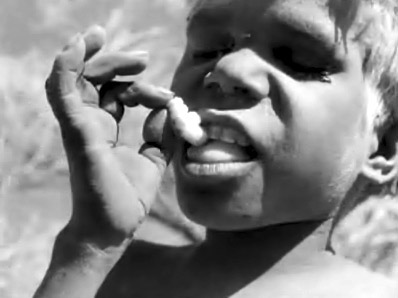
Desert People, boy eating "grub worm"
Eating a"grub worm"
Video: Desert People
Australia
A Fistful of Rice.
A Fistfull of Rice
Nepal
Claire Kathleen Roufs eating first food at 5 months.
Claire Kathleen Roufs
First solid food, rice (isn't as handy as the original)
5 months old
Duluth, MN, U.S.A.
Eating rat.
Video:"Eating Rat at the New Year"
Vietnam
View Other National Geographic Film Clips
 
Week 03 Day 05

Food in Prehistory
and Nonindustrial Societies

Tuesday 3 February 2009


Omnivore's Dilemma text.


Announcements


In the news...

Slow Food Lake Superior’s Ski & Stew

2-3:30 p.m. Sunday, Feb. 8, Hartley Nature Center, 3001 Woodland Ave. An afternoon of skiing, eating and learning about and supporting local food systems. Cost: $5, free for Slow Food members and ages 12 and younger. Reservations strongly encouraged by Tuesday. Call (218) 728-2687 or

e-mail lakesuperiorslowfood@yahoo.com.

Features of the Day

Assignment Review

Case Study #1: Food and Archaeology


Food Archaeology Bibliograpy

The Food Archaeology Case Study is due by Friday, 12 February 2010

"Diet and Human Evolution"
(slides)

Tehuacan maize.
Prehistoric Maize
Tehuacán
, Mexico

Old Business

  • "Setting the Table For a Cultural Feast": Nutritional Anthropology and Basic Human Nutritional Needs, from 143, Gary Paul Nabhan (slides)

return to scheduled features of the day

Assignment

Read:
The Cultural Feast, Ch. 3, "Food in Historical Perspective: Dietary Revolutions"
Read:
Omnivore's Dilemma, Ch. 15: "The forager"

Notes

  • Thursday 29 January 2009: "Setting the Table For a Cultural Feast": Nutritional Anthropology and Basic Human Nutritional Needs, #1-!43, Gary Paul Nabhan (slides)
  • Tuesday 3 February 2009: finished "Setting the Table For a Cultural Feast": Nutritional Anthropology and Basic Human Nutritional Needs, up to #265 "The Environment:(slides); began Diet and Human Evolution, finishing up to # 97 "What is Adaptation" (slides)
Up  
to top of page / A-Z index


Netsilik man hunting.
Hunting seal on the Spring IceNeandertal Hunter

[Research does not support the folk etymology of "Eskimo" as "eaters of raw meat"]

Week 03 Day 06

Food in Prehistory
and Nonindustrial Societies

Thursday 5 February 2009

videos: "Patterns of Subsistence" –
2:10 "Food Foragers and Pastoralists
"
and
2:40 "Food Producers
"
(60 min., 1994, VC 2466, pts. 7 & 8)

Nepal girl with yak_100.
Girl with baby yak

Nepal

Nepal girl with yak_100.
Yak milking
Tibet


Announcements

AFforum Topic 1


First U.S. Chocoholics?

Image.
Prehistoric Jars from Chaco Canyon, New Mexico
National Geographic

On Monday 2 February 2009 National Geographic announced that "Chemical residues found on pottery jar shards reveal that the practice of drinking chocolate had spread at least as far north as Chaco Canyon (map) in northern New Mexico by A.D. 1000 to 1125—400 years earlier than chocolate was thought to have reached what is now the United States." 2 February 2009 -- National Geographic

In November of 2007 National Geographic also announced the discovery of the origins of chocolate itself.

Have a look at these two articles from National Geographic,
and the class web page on chocolate:

First Chocoholics in U.S. Found in New Mexico?

Chocolate Origins Traced to Beer Makers 3,000 Years Ago

Chocolate

Questions:

1. What do you think is the major importance of these discoveries?

2. Why?


Be sure to set your "Folder Selector"
in the main window
to the current topic

[use the “Reload/Main button" to get to the main window]

Set Folder Selector to Topic 1

REM: Set PCfolder to curent topic.

REM: If you have any questions, you can post them on the AFforum
or bring them up in class

Feature of the Day

"Food Technologies: An Introduction to How People Get Their Food in Nonindustrialized Societies"
(Cf., The Cultural Feast, Ch. 5)

videos:

"Patterns of Subsistence" --


2:10
"Food Foragers and Pastoralists
"

In the news . . .

Urban foragers wander around the city in search of food, communion, and conversation -- Scout Report, Vol. 15 No. 30 (31 July 2009)


2:40
"Food Producers"

[From the Faces of Culture Series]
(60 min., 1994, VC 2466, pts. 7 & 8)

This two-part program is an introduction to
How People Get Their Food in Nonindustrialized Societies

Next time we will have an in-depth look at
the foragers of the Western Australian Desert region:
Desert People


(51 min., 1965, VC 1094)

Neandertal hunter.
Neandertal Hunter


Nepal girl with yak_100.

Yak milking
Tibet


Nepal girl with yak_100.

Girl with baby yak
Nepal

Old Business

  • next time

return to scheduled features of the day

Assignment

Read:
The Cultural Feast, Ch. 5, "Food Technologies How People Get Their Food in Nonindustrialized Societies"
Read:
America's First Cuisines, Chs. 7-11: The Maya

Notes

  • Tuesday 3 February 2009: finished "Setting the Table For a Cultural Feast": Nutritional Anthropology and Basic Human Nutritional Needs, up to #265 "The Environment:(slides); began Diet and Human Evolution, finishing up to # 97 "What is Adaptation" (slides)
  • Thursday 5 February: Introduced and viewed "Food Foragers and Pastoralists" "Food Producers" [From the Faces of Culture Series] (60 min., 1994, VC 2466, pts. 7 & 8)
 
Up  
to top of page / A-Z index


Envelope Image © 1998 - 2010 Timothy G. Roufs
Page URL: http:// www.d.umn.edu /cla/faculty/troufs/anthfood/afweek03.html
Last Modified 31 July 2009
Site Information ~ Main A-Z Index


View Stats