UMD small logo.   UMD
 Skip to the Contents  A B C D E F G H I J K L M N O P Q R S T U V W X Y Z
Week: 01 . 02 . 03 . 04 . 05 . 06 . 07 . 08 . 09 . 10 . 11 . 12 . 13 . 14 . 15 . 16

Other Important Search Links
search food on JSTOR
BBC Food
Wikipedia: Food | Food and drink | Food culture | Food history | Food Portal |
Wikipedia Categories: Food and Drink | History of Food and Drink | Historical Foods |
World Clock Cf.: Food Production and Animal Slaughter
FoodPressReleases.com

Food and Drug Administration Wire

OWL logo, Online Writing Lab, Purdue University.

Envelope: E-mail
Other Google Searches:
Recreation > Food
Business > Food and Related Products
Business > Hospitality > Food Service >
Business > Hospitality > Food Service | Restaurant Chains
  Home > Consumer Information > Food and Drink
Home > Cooking
Science
> Technology > Food Science
Shopping > Food
  Shopping > Health > Nutrition
Society > Issues > Environment > Food and Drink
Society > Law > Legal Information > Food Law
Society > Life Choices > Vegetarianism

Sicilian ice-cream in a bread bun. A good solution to a local problem: the Mediterranean heat quickly melts the ice-cream, which is absorbed by the bread.
"Palermo, Sicily, Italy
has the best gelato in the world"
-- Willie Henderson

Anthropology of Food

On-Line Resources

Spring 2010 Calendar

Summer Session 2010 Calendar
(06/07/2010 - 07/02/2010)

AFforum

World Clock Time
World Clock Events

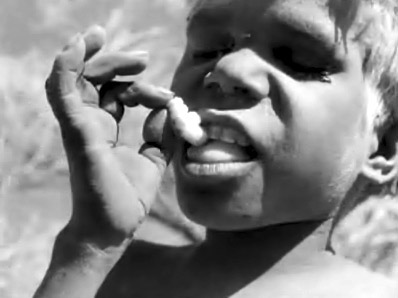
Desert People, boy eating "grub worm"
Eating a"grub worm"
Video: Desert People
Australia
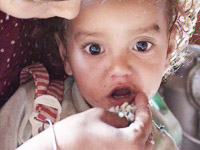
A Fistful of Rice.
A Fistfull of Rice
Nepal
Claire Kathleen Roufs eating first food at 5 months.
Claire Kathleen Roufs
First solid food, rice (isn't as handy as the original)
5 months old
Duluth, MN, U.S.A.
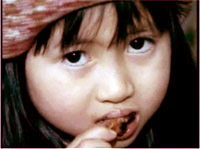
Eating rat.
Video:"Eating Rat at the New Year"
Vietnam
View Other National Geographic Film Clips
Spring Semester 2009

Anth 3888 Anthropology of Food

91145 -001 LEC, 02:00 P.M. - 03:15 P.M., Tu,Th (01/20/2009 - 05/08/2009), Cina  214, Roufs,Tim, 3 credits

URL ~ www.d.umn.edu/cla/faculty/troufs/anthfood/
eGradebook ~ www.d.umn.edu/egradebook
WebDrop ~ webdrop.d.umn.edu
MAforum ~ www.d.umn.edu/~troufs/AFforum
Skype logo. troufs
SMS/textmessaging 218.260.3032

to top of page / A/Z index   to top of page / A-Z index

Why food?

“Food is required by every human on earth, yet the types of food we eat and how we produce and consume it vary tremendously.  It is therefore a nearly perfect subject for anthropology, since it can be examined in terms of human biology, culture, and social status across time from our evolutionary ancestors to the present day....”  -- Ryan Adams, IUPUI Anthropology


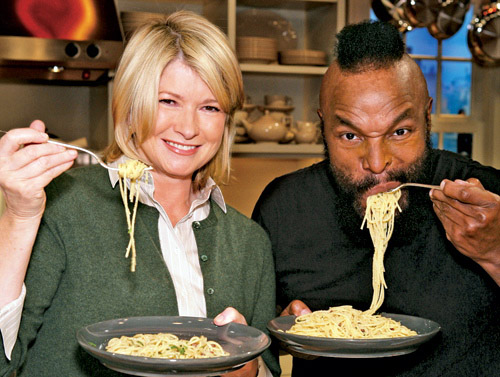
Martha Stewart and Mr. T.

locavore -- 2007 New Oxford American Dictionary Word of the Year

Conceptual Outline/Topics

(This outline follows the proposed anchor text: The Cultural Feast: An Introduction to Food and Society, 2nd Ed.)

  1. Food and Culture: Introduction and Orientation

  2. Basic Human Nutritional Needs and Nutritional Anthropology

  3. Diet and Human Evolution: Archaeology/Prehistory of Food and Subsistence

    1. Paleontology and the Diets of Extinct Hominids/Humans
    2. The Neolithic Revolution: Domestication of Plants and Animals
    3. “The Omnivore’s Paradox”
    4. “The Diseases of Civilization”

  4. Eating as a Cultural Affair
    1. Food Preferences
    2. Dietary Restrictions and Taboos
    3. Ritual Feasts

  5. Food Technologies: How People Get Their Food in Nonindustrialized Societies

    1. Hunting/Gathering/Foraging
    2. Horticulture
    3. Pastoralism
    4. Intensive Agriculture
    5. Contemporary Peasant Societies

  6. Food Technologies: How People Get Their Food in Industrialized Societies

    1. Structures of Industrial/Global Production, Distribution and Consumption
    2. Pre-globalization “Globalization”
    3. Genetically engineered crops and industrial/factory-farmed animals
    4. Organic and “Industrial Organic” foods, and sustainable agriculture
    5. Food security

  7. Food and Social Organization

    1. Food as a Means of Solidifying Social Ties
      1. Food/Cuisines and National, Ethnic, Class and Personal Identities
      2. Boundary Crossings
      3. Eating and Ritual
        1. Eating Ritual
        2. Ritual Feasting
      4. Food and Social Status/Food as Social Markers
    1. Food as a Means of Strengthening Economic and Political Alliances

    2. Local and Regional foods and food issues
      1. Local Foods
      2. Chippewa/Ojibwa/Anishinabe and other Native Americans
      3. Regional Immigrant Ethnic Foods
    1. Other America Immigrant Ethnic Foods

    2. European Union Regulations and Policies

  1. Worldview, Religion, and Health Beliefs: The Ideological Basis of Food Practices

    1. Food and Religion
    2. Food and Traditional Medicine, Health Beliefs and Practices
    3. Ritual/Non-ritual Fasting
    4. Food as Pleasure

  2. Food Linguistic Classification and Communication: Culturally Constructed Categories of Food

  3. Global Food Issues

    1. The Current World Food "Crisis"
    2. Overnutrition
    3. Manutrition
    4. Famine
    5. Development and issues of world hunger
      1. Feeding the World
      2. World Health Organization
    1. Food and Social Change: Dietary Behavioral Change
    2. The future of food

  1. Student Presentations on Term Paper Research


Catalogue Description

Advanced survey and comparative study of the relationship between food and culture in the past and present.  Topics include the domestication and evolution of plants and animals, biological and cultural aspects of the production, distribution, preparation, and consumption of food, and an analysis of the social and cultural significance of food—including food preferences and taboos, food and religion, food and identity, food and power, gendered division of labor in foodways, beliefs and values about foods, food symbols and metaphors, new food technologies, and the globalization of contemporary food systems.


Course Objectives/Outcomes

  1. American Anthropology has long emphasized a fourfold approach to the study of the humankind--one embracing physical anthropology, cultural anthropology, archaeology and linguistics--and one regularly doing so with a comparative methodology and explicitly holistic theoretical perspective.  It is an aim of the proposed course to demonstrate those interrelating characteristic qualities of the discipline with a foremost topic, the “cultural universal” of food.

  2. Within this comparative holistic traditional disciplinary framework the course aims to convey a basic understanding of fundamental biological nutritional needs, “derived” needs relating to the production/obtaining, distributing, preparing, consuming, and honoring/celebrating the use of food within a global perspective.

  3. The course aims to provide a fundamental understanding of subsistence strategies past and present, including domestication and evolution of plants and animals.

  4. The course aims to provide an understanding of prehistoric and contemporary regional cuisines and subsistence patterns, including those native and immigrant to Minnesota and the Upper Midwest.

  5. This course aims to familiarize students with comparative categories of food and foodways, and how they are constructed.

  6. The course aims to impart an understanding of the importance of the social and cultural significance of food--including food preferences and taboos, the relationship between food and religion, and food and identity, and food and power, gendered division of labor in foodways, beliefs and values about foods, food symbols and metaphors, new food technologies, and the globalization of contemporary food systems.

  7. This course aims to prepare students to think critically about the meanings of what we and others eat and drink, and of what we do not consume.

  8. This course aims to help students better understand societies of the world through an understanding of their foods and foodways.

  9. The course aims to understand and reflect on their personal relationship to food chains and food procurement and utilization systems.

  10. Finally, the course aims to provide some experience and practice at researching, writing about, and publicly presenting results of anthropological inquiry.


Banana.


Food preferences start young...

Casey Pedro Roufs, age 8 months
November 2007

#1 bananas

#2 veggies

nurture or nature?

Rutabaga.

Is a tomato a vegetable?

Ask Casey....

Fruits and vegetables.


Aztec woman blowing on maize before putting it into the cooking pot so it will not fear the fire.

Aztec woman blowing on maize before putting it into the cooking pot
so it will not fear the fire.

Florentine Codex I, fol 347 right
Late 16th century

Aztec Feasts

Aztec cuisine -- Wikipedia

to top of page / A/Z index   to top of page / A-Z index

Sugar skull, Day of the Dead.

Sugar Skull, Day of the Dead (El Día de los Muertos)

Wikipedia

to top of page / A/Z index   to top of page / A-Z index

Day's Place, Frozen Sap, Lake Mille Lacs, 1947

Day's Place, Frozen Sap, Lake Mille Lacs.
Creator: Monroe P. Killy
Photograph Collection, 1947
Visual Resources Database
Minnesota Historical Society
Location No. Collection I.69.202 Negative No.

to top of page / A/Z index   to top of page / A-Z index

Mrs. Day Granulating Maple Sugar, Lake Mille Lacs, 1948

Mrs. Day Granulating Maple Sugar, Lake Mille Lacs.
Creator: Monroe P. Killy
Photograph Collection, 1948
Visual Resources Database
Minnesota Historical Society
Location No. Collection I.69.214 Negative No.

to top of page / A/Z index   to top of page / A-Z index

Woman and Blueberries, Parick DesJarlait, 1971

Woman and Blueberries.
Creator: Patrick DesJarlait (1912-1972)
Art Collection, Watercolor, 1971
Visual Resources Database
Minnesota Historical Society
Location No. AV1979.211 Negative No. 3061

to top of page / A/Z index   to top of page / A-Z index


Paul Buffalo meditating wild rice beds.

Paul Buffalo Meditating Wild Rice Beds


to top of page / A/Z index   to top of page / A-Z index


TR: "Could you tell us how you ask for a piece of blueberry pie in Chippewa?"

PB: "You know I had a lot of laughs over that [word for pie]. One time I says ah . . . I said to my . . . the next table, I says, “pass that baa-tay . . .” , it's ah . . . apple pie, “Pass that baa - tay - mi - shi - mi - ni - /\ - bii - tu - sI - jay - g/\n - i - bash - kI - mI - /\ - ssay - g - /\/ - d/\ - b/\ - kway - \ii - g/\n - sI - gu - bun.”

"And everybody looked at me. 'What happened to you?'”

[Laughs]

"I said . . . I said 'Pass the pie over there.'”

[Laughs]

"ji - gay - tay - uu - zo - mi - nI - bi/\sh - k/\mI - /\ - ssi - g/\ - d/\ - b/\ - kway - jii - g/\n - i - ssI - gu - b/\n, that's 'the pie' in Indian, blueberry pie and apple pie. "

Gee.

[Laughs]

That's how it's made, the sauce and all that stuff you know, how . . . how it's prepared. And a lot of the jaw-breakers

Paul Buffalo interview, 1971
<www.d.umn.edu/cla/faculty/troufs/Buffalo/video/excerpts_transcript.html>


to top of page / A/Z index   to top of page / A-Z index

"The Greek name of a type of fricasse
is thought to be the longest word ever to apear in all of literature:
coined by the ancient playwright Aristophanes, the word is

Lopadotemachoselachogaleokranioleipsanodrimhypotrimmatosilphioparaomelitokatakechymenokichlepikossyphophattoperisteralektryonoptekephalliokigklopeleiolagoiosiraiobaphetraganopterygon

Suffice it to say it's a fricasse that contains lots of ingredients."


-- Barnette, Martha. Ladyfingers and Nun's Tummies: A Lighthearted Look At How Foods Got Their Names. NY: ASJA Press, 2005, p. 135.


to top of page / A/Z index   to top of page / A-Z index

Indian hunter with deer.

Indian hunter with deer.
Creator: Roland W. Reed
Photograph Collection, 1908
Visual Resources Database
Minnesota Historical Society
Location No. E97.32F h2 Negative No. 73577

Indian spearing fish, 1925

Indian spearing fish.
Creator: Roland W. Reed
Photograph Collection, Postcard, 1925
Visual Resources Database
Minnesota Historical Society
Location No. E97.32F r9 Negative No. 62678

to top of page / A/Z index   to top of page / A-Z index

Adam and Eve by Albrecht Dürer (1507) given by Christina of Sweden to King Philip IV in 1654.

Adam and Eve (1507)

Albrecht Dürer
(1471 - 1528)
Wikipedia


Karris, Robert J. Eating Your Way Through Luke's Gospel.
Collegeville, MN: Liturgical Press, 2006.

to top of page / A/Z index   to top of page / A-Z index

Marriage at Cana, Giotto_-_Scrovegni.

Marriage at Cana

Giotto di Bondone
(1267 -1337)
Wikipedia

to top of page / A/Z index   to top of page / A-Z index

The Last Supper, Leonardo da Vinci, 1498.

The Last Supper

Leonardo da Vinci
(1498)
Wikipedia

to top of page / A/Z index   to top of page / A-Z index

Marriage at Cana, Giotto_-_Scrovegni.

The Last Supper

Marcos Zapata
18th century, Cathedral of Santo Domingo, Cusco, Peru

Christ and his disciples contemplate a feast
of roast guinea pig


Luard, Elisabeth. Sacred Food: Cooking for Spiritual Nourishment.
Chicago: Chicago Review Press, 2004 [2001], pp. 238-239

to top of page / A/Z index   to top of page / A-Z index

Old King Arthur Flour Logo.

Old King Arthur Flour Logo
Sands, Taylor & Wood Co.
est.1790

King Arthur Flour bicentennial cookbook, with altered logo.

1990

 
to top of page / A/Z index   to top of page / A-Z index

McFries "Reduced Lard" cartoon.

Larry Wright, The Detroit News
9/7/2002

to top of page / A/Z index   to top of page / A-Z index
 

Food, Glorious food!

BOYS

Is it worth the waiting for?
If we live 'til eighty four
All we ever get is gru...el!
Ev'ry day we say our prayer --
Will they change the bill of fare?
Still we get the same old gru...el!
There is not a cust, not a crumb can we find,
Can we beg, can we borrow, or cadge,
But there's nothing to stop us from getting a thrill
When we all close our eyes and imag...ine

Food, glorious food!
Hot sausage and mustard!
While we're in the mood --
Cold jelly and custard!
Pease pudding and saveloys!
"What's next?" is the question.
Rich gentlemen have it, boys --
In-di-gestion!

Food, glorious food!
We're anxious to try it.
Three banquets a day --
 
Our favourite diet!

Just picture a great big steak --
Fried, roasted or stewed.
Oh, food,
Wonderful food,
Marvellous food,
Glorious food.

Food, glorious food!
What is there more handsome?
Gulped, swallowed or chewed --
Still worth a kin's ransom.
What is it we dream about?
What brings on a sigh?
Piled peaches and cream , about
Six feet high!

Food, glorious food!
Eat right through the menu.
Just loosen your belt
Two inches and then you
Work up a new appetite.
In this interlude --
Then food,
Once again, food
Fabulous food,
Glorious food.
[these lyrics are found on http://www.songlyrics.com]

Food, glorious food!
Don't care what it looks like --
Burned!
Underdone!
Crude!
Don't care what the cook's like.
Just thinking of growing fat --
Our senses go reeling
One moment of knowing that
Full-up feeling!

Food, glorious food!
What wouldn't we give for
That extra bit more --
That's all that we live for
Why should we be fated to
Do nothing but brood
On food,
Magical food,
Wonderful food,
Marvellous food,
Fabulous food,

OLIVER

Beautiful food,

BOYS

Glorious food.

-- Oliver

to top of page / A/Z index   to top of page / A-Z index


Registration


to top of page / A/Z index   to top of page / A-Z index

Instructor: Tim Roufs


SiteMap

Last Modified 17 April 2009

Up  
to top of page / A-Z index


Envelope Image © 1998 - 2010 Timothy G. Roufs
Page URL: http:// www.d.umn.edu /cla/faculty/troufs/anthfood/index.html
Last Modified 17 April 2009
Site Information ~ Main A-Z Index


View Stats