Cutting Costs for College Textbooks -- NPR Texts:
|
| CampusBooks.com | Amazon.com | Barnes and Noble| ecampus.com | half.com |
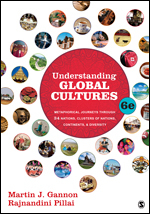
Understanding
Global Cultures:
Published By: SAGE Publications, Thousand
Oaks, CA, 2010 ISBN-10: 1412957893 Description: "In summary, this is a significant book . . . for a multitude of audiences, including scholars, practitioners, students, expatriates, travelers, and those who are simply interested in culture. . . . This book is also an ideal reference tool, since the metaphors are easy to remember yet rich in contextual value and are presented in a logical structure for quick consultation. Overall, this book is enormously appealing, genuinely useful, and a worthy addition to any collection." -- Thunderbird International Business Review (reviewing the Third Edition) "In Understanding Global Cultures, Fourth Edition, authors Martin J. Gannon and Rajnandini Pillai present the cultural metaphor as a method for understanding the cultural mindsets of individual nations, clusters of nations, and even continents. The fully updated Fourth Edition continues to emphasize that metaphors are guidelines to help outsiders quickly understand what members of a culture consider important. This new edition includes a new part structure, three completely new chapters, and major revisions to chapters on American football, Russian ballet, and the Israeli kibbutz.' This book describes a method, the cultural metaphor, for understanding easily and quickly the cultural mindset of a nation and comparing it to those of other nations. In essence, the method involves identifying some phenomenon, activity or institution of a nation’s culture that all or most of its members consider to be very important and which they identify closely. Metaphors are not stereotypes. Rather, they rely upon the features of one critical phenomenon in a society to describe the entire society. The characteristics of the metaphor then become the basis for describing and understanding the essential features of the society. For example, the Italians invented the opera and love it passionately. Five key characteristics of the opera are the overture, spectacle and pageantry, voice, exteriority, and the interaction between the lead singers and the chorus. These features are used to describe Italy and its cultural mindset. Thus the metaphor is a guide or map that helps the student of foreigner understand quickly what members of a society consider to be very important. The generic types of cultural frameworks developed by Triandis and Fiske, and the torn and cleft culture framework developed by Huntington, form the underpinning of the book. These frameworks allow the reader to gain new insight into various cultural metaphors and to begin to address the challenging issue of integrating cultural and economic perspectives.
Understanding
Global Cultures [Afghanistan] [your-nation.com] [OnlineNewspapers.com]
|
||||||||||||||||||||||||||||||||||||||||||||||||||||||||||||||||||||||||||||||||||||||||||||||||||||||||||||||||||||||||||||||||||||||||||||||||
|
Available used from about $22.00 | CampusBooks.com | Amazon.com | Barnes and Noble| ecampus.com | half.com |
Distant
Mirrors: America as a Foreign Culture, Third Edition Authors: Philip R. DeVita (State University of New York, Plattsburgh) & James D. Armstrong (State University of New York, Plattsburgh) (eds.) Published By: Wadsworth Thomson Learning, Belmont, CA, 2002 Pages: 197 Paperback (ISBN 0534556485)
Description: The book is intended for use as a supplement for courses in cultural anthropology, sociology, history, English, and American studies. It is designed for any course where the goal is to show remarkable aspects of our U.S. culture. The book covers the subjects of family, kinship, class, and language. It is valuable to professors who want to teach such topics as ethnocentrism and relativism, the problems of cross-cultural experiences, and the ethnographic method. Anthropology has a long history of the "other," yet we can look right here at home for the strangeness we seek. We often neglect to ask the questions that reveal our own culture's underlying value and beliefs. In this volume, we bring the American culture into focus. For students to understand the full impact of ethnography, to experience cultural relativity and to gain a foundation to build informed comparisons, students need a firm grasp of their own culture--and need to use this volume. The Third Edition consists of 19 essays written by anthropologists and other scholars using an ethnographic perspective. The essays enable students to understand themselves better by focusing on their own culture and seeing it from a new perspective. This collection gives anthropology a comparative perspective that provides a reflective lens, a mirror, for understanding ourselves and the world in which we live.
Distant
Mirrors
Features:
|
| |
Last Modified 25 March 2012
© 1998 - 2012 Timothy G. Roufs
Page URL: http:// www.d.umn.edu /claweb/faculty/troufs/anth1095/index.html
Last Modified 25 March 2012
Site Information / Disclaimers ~ Main A-Z Index
View Stats