UMD small logo.   UMD 


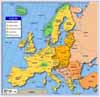
World Map Thumbnail.
EU Countries

Peoples and Cultures of Europe

search links page
~ Google advanced
~ Google images

search on JSTOR

Wikipedia > Europe
~ Lists and Tables
~ Maps
  ~ Europe
    ~ Central   ~ Southern
    ~ Eastern   ~ Southeastern
      ("Balkans")
    ~ Northern   ~ Western
   
BBC News: Europe
Duluth News Tribune


Spring 2010 Calendar

to top of page / A/Z index   to top of page / A-Z index


Texts and Other Class Material

Online Reserve Materials

Cutting Costs for College Textbooks -- NPR

| UMD Bookstore | CampusBooks.com | Amazon.com | Barnes and Noble | ecampus.com | half.com |

general textbook information

A note on the textbooks:  This course will, to a large extent, be taught European style, that is, as far as the texts are concerned, we will use a few original full-length books and articles and only one American-style textbook edited specifically for classroom use.

Exams will be open-book essays, so it is important for you to have your own copy of each text, and it is a good idea that you take your reading notes right in your copy of the text itself.

Having said that, please note that excellent inexpensive books in many fields are often available online.  Today, for example, one can get a very good used copy of Sophie D. Coe’s America's First Cuisines–a “master text” and a genuine classic in the study of the Anthropology of Food–for $8.75, plus standard shipping (see “Available used from about $8.75” on the text webpage).  Sidney Mintz’s Sweetness and Power: The Place of Sugar in Modern History--one of the most important Anthropology of Food books written to date--sells for $8.00, plus standard-rate shipping.

The course anchor text, The Cultural Feast: An Introduction to Food and Society, 2nd Edition, is currently selling online for about $71.00 (plus standard-rate shipping). 

(In addition, thousands of books are available free online, full text versions <http://www.d.umn.edu/cla/faculty/troufs/reference/books.html#title>, and might occasionally be useful in one or more of your other courses.  For example, Brillat-Savarin’s The Physiology of Taste, often called the first modern work on gastronomy—the study of the relationship between culture and food—is available free online both in English <http://www.gutenberg.org/etext/5434> and in the original French, Physiologie du gout, <http://www.gutenberg.org/etext/22741>.  You’re probably already familiar with some of it, like Brillat-Savarin’s dictum: “Tell me what you eat, and I will tell you what you are.")

One thing that you should keep in mind when approaching these readings, which I will talk more about the first week of class, is that the exams are open-book.  And for that you should normally just need to read the books carefully and be able to discuss them intelligently.  That is, you should read these as if you had picked it/them up at an airport or neighborhood bookshop because you were interested in the subject and wanted to know more about it.  Some people are used to principally memorizing facts in classes.  This class is not one where that is the focus.  It is about investigating new topics, reading, listening, synthesizing ideas, thinking, exploring, and becoming familiar enough with the various subjects, peoples and places to carry on an intelligent conversation in modern-day society.  And yes, in this class we’re going to try a little tasting also; Ron Haxton of The Kitchen Window in Minneapolis will come up to prepare an authentic Moroccan dinner for the class, 5:00 on the 13th of April.  And we’ll have some chocolate on the 21st of April (in part, in honor of Sophie and Michael Coe who wrote another Anthropology of Food classic, The True History of Chocolate), and some animal crackers in a few weeks on the 27th.  And on the 16th of April we’ll have a chance to discuss real-life local and regional food issues with Stu Sivertson whose family has been fishing commercially on Lake Superior since 1892, and whose ancestors used hooks like the Norwegian Neolithic fishhook pictured next to Stu’s appearance date in the syllabus.

With reference to what I was saying about reading the textbooks, Michael Pollan’s The Omnivore's Dilemma <http://www.d.umn.edu/cla/faculty/troufs/anthfood/aftexts.html#OmnivoresDilemma> is a good example of what I am talking about.  It is currently #11 on the New York Times Best Paperback nonfiction list <http://www.nytimes.com/2009/01/11/books/bestseller/bestpapernonfiction.html>, after having been in the top ten for a long, long time. The Omnivore's Dilemma is a book that people in the United States are currently reading, and talking about, just because they're interested in the topic.  I doubt if too many of those folks are sitting up nights just memorizing facts from it.

If you want to start reading something, have a look at Michael Pollan's shorter work "The Food Issue--An Open Letter to the Next Farmer in Chief" in theThe New York Times Magazine, 9 October 2008 (registration required, but it's free) <http://www.nytimes.com/2008/10/12/magazine/12policy-t.html?sq=food%20issue&st=cse&scp=1&pagewanted=all>.  Or, join much of the rest of America and have a look at The Omnivore's Dilemma.  (If you’re looking at the book, notice in the end he comes full circle to where our class begins—with foraging, hunting and gathering.)

Tim Roufs
7 January 2009


Parman text: Europe in the Anthropological Imagination.

to top of page / A/Z index   to top of page / A-Z index

available online from about $23.00 (+ p/h)

| UMD Bookstore | CampusBooks.com | Amazon.com | Barnes and Noble | ecampus.com | half.com |


2009.01.06

Parman, Susan.
Europe in the Anthropological Imagination.
Upper Saddle River, NJ: Prentice Hall, 1998.
(ISBN: 0133374602)

"This is a provocative, reflective book about how American anthropologists study Europe. But, since anthropology has traditionally been defined as a field that studies the non-western, exotic Other, an anthropological study of Europe would appear to be a misnomer. In a larger sense, then, it offers insights into the manner in which ideas emerge and evolve within a discipline. The book is composed of fourteen essays by twelve anthropologists who address how, when, where, and why they first began to study Europe and the implications of those studies for the development of anthropology in general."

Review

Costa, Kelli Ann. "From Center to Margins: An Intellectual History of the Anthropology of Europe." Review of Susan Parman, ed. Europe in the Anthropological Imagination. Exploring Cultures. Upper Saddle River, N.J.: Prentice Hall, Inc., 1998. Humanities and Social Sciences Online (H-NET) H-SAE Society for the Anthropology of Europe <http://www.h-net.msu.edu/reviews/showrev.cgi?path=18384921682875>. 25 October 2005.


Table of Contents

  Preface
  Introduction: Europe in the Anthropological Imagination
   
Ch. 1 Strangers in a Crowded Field: American Anthropology in France
Ch. 2 Europe through the Back Door: Doing Anthropology in Greece
Ch. 3 Bringing the "Other" to the "Self": Kypseli - The Place and the Film
Ch. 4 Europe on Film
Ch. 5 Representing Italy
Ch. 6 Returning with the Emigrants: A Journey in Portuguese Ethnography
Ch. 7 Restless Continent: Migration and the Configuration of Europe
Ch. 8 Themes in the Anthropology of Ireland
Ch. 9 A Forty-Year Retrospective of the Anthropology of Former Yugoslavia
Ch. 10 Utter Otherness: Western Anthropology and East European Political Economy
Ch. 11 An Anthropology of the European Union, from Above and Below
Ch. 12 The Place of Europe in George P. Murdock's Anthropological Theory
Ch. 13 The Meaning of "Europe" in the American Anthropologist (Part I)
   
  Bibliography
  Index

H-SAE REVIEW: Costa on Parman, ed., Europe in the Anthropological Imagination

to top of page / A/Z index   to top of page / A-Z index


Ernestine Friedl.  Vasilika: A Village in Modern Greece.

available online from about $3.00 (+ p/h)
| UMD Bookstore | CampusBooks.com | Amazon.com | Barnes and Noble | ecampus.com | half.com |
2009.01.06

Friedl, Ernestine.
Vasilika: A Village in Modern Greece.
Belmont, CA: Thompson Wadsworth, 2002*
(ISBN: 0030115450)
(Thomson-Wadsworth Case Studies in Anthropology ISBN: 0534971652)

*[As the purpose of this text is for you to have a look at one of the genuine "Master Texts" in the Anthropology of Europe--a classic--earlier editions of this text are also suitable for class.]

Table of Contents

  Preface and Acknowledgements
   
  Introduction
   
Ch.1 The Village: As a Setting
    The Area Surrounding Vasilika
    Inside Vasilika
    Movement in and through the Village
     
Ch.2 The Family: Economic Activities
    Major Crops
    Miscellaneous Crops
    Livestock
    Variations in Wealth
    Specialization of Labor
   
Ch.3 The Family: Consumption Habits
    Inside Vasilika's Homes
    Cleanliness and Order
    Clothing
    Urbanity vs. Convenience
   
Ch.4 The Family: Dowry and Inheritance; Formal Structure
    Inheritance by Sons
    Dowering the Daughter
    Negotiations, Courtship, and Marriage
    Disposition of Dower Property
    Division of the Patrimony
    Consequences of Dowry System
    Attitudes Toward the Dowry System
    Family and Kin Structure
   
Ch.5 Human Relations
    Attitudes Toward Man and Nature
    Adult-Child Relationships
    Conversation and Argument
    Transmission of Value
    Noncompetitive Social Groupings
   
Ch.6 The Village: As a Community
    The Village Government
    The Village School
    The Village Church
    Religious Feast Days
    The Villagers as Greeks
   
  Glossary
  References Cited
  Recommended Reading

Review:

Fred Gearing. American Anthropologist, New Series, Vol. 65, No. 5, Selected Papers in Method and Technique (Oct., 1963), pp. 1170-1172. (available on JSTORE)


to top of page / A/Z index   to top of page / A-Z index


Mark Kurlansky. Cod: A biography of the Fish That Changed the World.

available online from about $3.50 (+ p/h)
| UMD Bookstore | CampusBooks.com | Amazon.com | Barnes and Noble | ecampus.com | half.com |
2009.01.06

Kurlansky, Mark.
Cod: A Biography of the Fish That Changed the World.
NY: Penguin Books, 1998.
(ISBN : 0140275010)

"You probably enjoy eating codfish, but reading about them? Mark Kurlansky has written a fabulous book--well worth your time--about a fish that probably has mattered more in human history than any other. The cod helped inspire the discovery and exploration of North America. It had a profound impact upon the economic development of New England and eastern Canada from the earliest times. Today, however, overfishing is a constant threat. Kurlansky sprinkles his well-written and occasionally humorous history with interesting asides on the possible origin of the word codpiece and dozens of fish recipes. Sometimes a book on an offbeat or neglected subject really makes the grade. This is one of them."

From Library Journal

"In this engaging history of a '1000-year fishing spree,' Kurlansky . . . traces the relationship of cod fishery to such historical eras and events as medieval Christianity and Christian observances; international conflicts between England and Germany over Icelandic cod; slavery, the molasses trade, and the dismantling of the British Empire; and, the evolution of a sophisticated fishing industry in New England. Kurlansky relates this information in an entertaining style while providing accurate scientific information. The story does not have a happy ending, however. The cod fishery is in trouble, deep trouble, as the Atlantic fish has been fished almost to extinction. Quoting a scientist from the Woods Hole Biological Laboratory, Massachusetts, Kurlansky notes that to forecast the recovery of the cod population is to gamble: 'There is only one known calculation: 'When you get to zero, it will produce zero.'"

Cod received the James Beard Award for Excellence in Food Writing and was a New York Public Library Best Book of 1997.


Table of Contents

Prologue: Sentry on the Headlands (So Close to Ireland)

PART ONE: A FISH TALE

Ch. 1   "The Race to Codlandia"
Ch. 2   "With Mouth wide Open"
Ch. 3   "The Cod Rush"
Ch. 4   "1620: The Rock and the Cod"
Ch. 5   "Certain Inalienable Rights"
Ch. 6   "A Cod War Heard 'Round the World"

PART TWO: LIMITS

Ch. 7   "A Few New ideas Versus Nine Million Eggs"
Ch. 8   "The Last Two Ideas"
Ch. 9   "Iceland Discovers the Finite Universe"
Ch. 10 "Three Wars to Close the Open Sea"

PART THREE: THE LAST HUNTERS

Ch. 11 "Requiem for the Grand Banks"
Ch. 12 "The Dangerous Waters of Nature's Resilience"
Ch. 13 "Bracing for the Spanish Armada"
Ch. 14 "Bracing for the Canadian Armada"

A COOK'S TALE: SIX CENTURIES OF COD RECIPES

Bibliography
Acknowledgments
Index

to top of page / A/Z index   to top of page / A-Z index


Front Cover of Nan: The Life of an Irish Traveling Woman, Revised Edition.

available online from about $11.00 (+ p/h)
| UMD Bookstore | CampusBooks.com | Amazon.com | Barnes and Noble | ecampus.com | half.com |
2009.01.06

Gmelch, Sharon
Nan: The Life of an Irish Travelling Woman, Revised Edition.
Long Grove: IL: Waveland Press, 1991.
(ISBN: 0881336025)

From Publishers Weekly

"Ireland's tinkers or 'Travellers,' pariahs in their own land, are a sociological anomaly, fast disappearing in contemporary Ireland. In 1971 Gmelch, a New York professor of anthropology, took up residence in Holylands, an official campsite set up outside Dublin by the government to keep tinkers off the roads. She moved there to become better acquainted with Nan, a Traveller born in 1919 in a tent in the Irish midlands. Nan's oral history, her self-described 'awful mixup of a life,'' takes us into the Travellers' periods of pleasant, patched-together domesticity that are inevitably shattered by violence and marital crises, usually precipitated by drink. Nan's marriages, her 18 children, the shocking physical abuse perpetrated by one husband, did not break her, and even allowed her a little happiness. Nan's story provides a unique perspective on 20th century Irish history." PW. (May 27)

From Library Journal

"Nan Donohoe's life story is told, most ly in her own words, as representative of the native Irish gypsies known as travellers, or tinkers. It is a story of the will to survive despite poverty, disease, illiteracy, abuse, and well-intentioned but ineffective bureaucratic interfer ence. For generations these itinerants peddled wares and services to the rural populace. After World War II, with mass produced goods and machinery readily available to farmers, their means of livelihood vanished and they began to camp nearer urban centers, causing great social problems. They are now mostly in government camps and receiving welfare because assimilation into the mainstream appears impossi ble. Similarities with the migrant farm worker in the United States abound. For specialist and lay reader alike." -- Sondra Brunhumer, Western Michigan Univ. Libs., Kalamazoo

Contents

  FOREWORD
  PREFACE / PREFACE 1991
   
I
Nan
II
The Sweep's Daughter
III
The Kitchen Maid
IV
The Unwilling Wife
V
Travelling in the North
VI
Never the Same After
VII
Galway
VIII
Dublin
IX
Birmingham
X
Holylands
XI
The Old One
   
  EPILOGUE
  NOTES
  FURTHER READING
  PHOTOGRAPHS

to top of page / A/Z index   to top of page / A-Z index


John Messenger.  Innis Beag: Isle of Ireland.

available online from about $2.00 (+ p/h)
| UMD Bookstore | CampusBooks.com | Amazon.com | Barnes and Noble | ecampus.com | half.com |
2009.01.06

NOTE: For Spring 2009 the UMD Bookstore has only a limited number of these books available, so you might need to buy it online

Messenger, John C.
Inis Beag: Isle of Ireland.
Long Grove: IL: Waveland Press, 1983.
(ISBN: 0881330515)

"Inis Beag is a fictitious name for one of the many inhabited, rocky, barren islands of the Irish Gaeltacht. Messenger's descriptive analysis of this closed community includes the subsistence, material culture, social organization/control, and religion/values dimensions, as well as a strong focus on folklore, Christian reinterpretations of pagan elements, music, song, and dance. A very human picture emerges of these islanders, folk people in almost every respect."

Table of Contents

Foreword
Introduction

1. The Island and Its Past
2. The Land and the Sea
3. The Village and the Family
4. The Supernatural and the Esthetic
5. The Future of the Island

References
Recommened Reading

to top of page / A/Z index   to top of page / A-Z index


Also highly recommended,
with full-text on-line
at no cost:
Illustration from The Aran Islands by John M. Synge, 1907.
The Aran Islands

highly recommended
a classic from one-hundred years ago

(full-text available free on-line)

John Millington Synge
The Aran Islands
John W. Luce and Company, 1907
(full-text on-line)

short biography of John Millington Synge -- Wikipedia

"Nothing much happens on the Aran Islands--at least, not much went on there in the late 19th century, when John Synge sailed out to these mist-shrouded, salt-sprayed, and wave-battered chunks of rocks south of Ireland. Therein lies the charm of the setting and of this lovely book, which captures the saltiness of both the marine air and the time-lost characters, who deeply believe in the magical "wee people." In cottages where nets and fishing tackle hang from beams, the women (who always wear red dresses and petticoats, as do some of the boys) sit at their spinning wheels or sew cow-skin sandals, while the fishermen spin yarns about fairies, sunken vessels, and bags of gold gained from adulterous wives. The big happening of the year is when roofs are rethatched--an event that blossoms into a festival with twisted rope stretching from kitchen table through lane to nearby field. Synge seems an ambassador from a different world: addressed as "noble person," he brings tokens of modernity--be they clocks or simple magic tricks that beguile the locals. First published in 1907, this re-released travelogue gives a poignant peek into another time and begs a visit to the Aran Islands to see how, or if, they have changed." -- Melissa Rossi

The above text refers to the paperback edition.

Table of Contents

Title Page
Introduction
Author's Foreword

Part I
Part II
Part III
Part IV

to top of page / A/Z index   to top of page / A-Z index


Elizabeth L. Krause. A Crisis of Births: Population Politics and Family-Making in Italy.

available online from about $17.50 (+ p/h)
| UMD Bookstore | CampusBooks.com | Amazon.com | Barnes and Noble | ecampus.com | half.com |
2009.01.06

Krause Elizabeth L.
A Crisis of Births: Population Politics and Family-Making in Italy.
Belmont, CA: Thompson Wadsworth, 2005.
(ISBN: 0534636934)

"This book tells the story of one society's remarkable experience when Italians in the late 1990s attained the lowest birthrate per women of any nation in the world. This case study draws on two years of ethnographic fieldwork over a five year period, to examine the conflicts as well as the possibility that this trend in family-making has created for an otherwise family-centered culture. Krause's innovative project seeks to understand a pressing contemporary issue, and the 'story' she tells takes readers behind the scenes of demographic numbers to reveal what aggregate statistics cannot--a cultural 'politics of population' in which Italians struggle over the meanings of family and children in contemporary society. The reader will gain an in-depth understanding of why Italy's birthrate has fallen so low and what this means for Italians as individuals and Italy as a society and how reproduction has become politicized. The author finds answers in intensely personal dialogues with ordinary people ranging from sweater-makers to counts, and aging bachelors to doting mothers. Their life experiences reveal how a silent revolution against patriarchy reshapes social and sexual morality to create new imperatives for family making. The author hopes to prompt different and critical thinking about populations and the cultural struggles related to the politics of everyday life in modern society."

Table of Contents

Preface

1. Population Politics, Population Struggles
2. Family Tree, Revolutionary Roots
3. Field Work, Sweater Work
4. Displaying Class, Consuming Distinction
5. Labors of Love, Love's Labors Lost
6. Gendered Myths, Gender Strife
7. Demographic Alarms, Racial Reverberations
8. Conclusion: Globalizing Policy, Policing Populations

Epilogue
Bibliograpy
Index

Features

In the context of a nationally declining birthrate, this book focuses on the value Italians place on family and children and addresses both the reasons for the decline and the impact it has had on individuals and the society.

By examining comparative and global perspectives on the cultural politics of population, Krause encourages the reader to think critically and differently about demographics, cultural struggles, and the politics related to everyday life in modern society.

Grounded in kinship, family, and sexuality, this case study promises to spark interest and debate, as it challenges ethnocentric assumptions about the nature of family and politics in Italy and other European nations.

Intimate, life history narratives and dialogues support the main themes of each chapter, making the book both intellectually and emotionally appealing to readers.

Krause challenges the "scientific discourse" of demography by offering cultural interpretations and analysis to achieve deeper understandings of family and sexuality in society.

 
to top of page / A/Z index   to top of page / A-Z index


to top of page / A/Z index   to top of page / A-Z index

Envelope Image © 1998 - 2010 Timothy G. Roufs
Page URL: http:// www.d.umn.edu /cla/faculty/troufs/anth3635/cetexts.html
Last Modified 21 October 2009
Site Information ~ Main A-Z Index


View Stats