Envelope: E-mail  

search links page
~ Google advanced
~ Google images
~ Google books

search on JSTOR

Wikipedia >
A B C D E F G H I J K L M N O P Q R S T U V W X Y Z
Maps    Useful WebSites     Anthropology in the News     BBC News     Weather
explore the world -- Lonely Planet

Tech Resources for Students


Sicilian ice-cream in a bread bun. A good solution to a local problem: the Mediterranean heat quickly melts the ice-cream, which is absorbed by the bread.

"Palermo, Sicily,
has the best gelato in the world"
-- Willie Henderson (2005)

to top of page / A/Z index   to top of page / A-Z index

Food

see also

Prehistoric Food

Recipes

individual countries and cultures

Anthropology of Food Course

course bibliography

Society for the Anthropology of Food and Nutrition --
American Anthropological Association


Paleolithic-style diet -- Wikipedia

search food on JSTOR


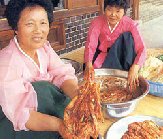
Kimchi
Kimchi
Korea

In the News


to top of page / A/Z index   to top of page / A-Z index

VIDEO


From The Scout Report

December 21, 2007 | Volume 13, Number 49

Ten years after Dolly, cloning livestock continues

US biotech firms launch tracking system for cloned livestock
http://news.yahoo.com/s/afp/20071219/ts_alt_afp/usbiotechclonefarmfood

Cloned Cows' Milk, Beef Up to Standard
http://www.washingtonpost.com/wp-dyn/articles/A45025-2005Apr11.html

Dolly for dinner? Assessing commercial and regulatory trends in cloned livestock
http://www.nature.com/nbt/journal/v25/n1/full/nbt0107-47.html;jsessionid=8257A00C1E76BAF39148F917A35D1712

FDA and Pew Initiative on Food and Bio-technology workshop
http://pewagbiotech.org/events/0924/

Pew Initiative on Food and Biotechnology Survey
http://pewagbiotech.org/research/2004update/overview.pdf

A decade on from Dolly
http://news.bbc.co.uk/2/hi/science/nature/6359011.stm


It has been over ten years since the birth of Dolly the sheep was announced. The event received enormous media attention at the time, but since then the cloning of livestock animals has continued without the media scrutiny. Those who clone livestock hope to improve breeding efficiency, enhance and enrich food, preserve endangered species and even clone pets. In the past two years, researchers with the FDA have determined that milk and meat from cloned cattle are almost identical to those from conventionally bred cattle. Numerous countries and independent research groups continue to compare the products from cloned versus conventionally produced animals. The FDA's Center for Veterinary Medicine (CVM) published a draft executive summary entitled 'Animal Cloning: A Risk Assessment', in which it concluded "edible products from normal, healthy clones or their progeny do not appear to pose increased food consumption risks relative to comparable products from conventional animals." Most in the industry believe that products derived from the offspring of cloned cattle and pigs will enter the food chain more widely by 2010. Several thousand clones of livestock species now exist globally at both research organizations and commercial enterprises. As the cloning of livestock animals becomes more economically feasible, regulatory agencies will likely need to closely monitor the products. Just recently, a US biotechnology firm launched a program to track cloned cattle and pigs in anticipation of the possible end of a moratorium on meat and milk from cloned livestock. Although this issue seems to have been on the backburner over the past few years, it is certain that the cloning of animals to produce human food will again become a focus of public and media attention. [CMH]

In the first link users can find out more about the new tracking system designed for cloned livestock and how feasible this system may be if begun in the early stages of producing cloned animals for food. In the second link, visitors can read about the research done on cloned meat and milk and discover why it is believed they are up to standard. The next piece comes from Nature.com as they assess commercial and regulatory trends in cloned livestock in a detailed and in-depth article. The fourth link leads to a FDA and Pew Initiative on Food and Biotechnology workshop, visitors who want to know more about cloned or transgenic animals should definitely pay a visit. By clicking on either of the Proceedings on Transgenic Animals or the Proceedings on Cloned Animals, visitors will be taken to a PDF of these very clear and succinct presentations. The fifth link is a PDF, again from the Pew Initiative on Food and Biotechnology, but this time visitors will find a comprehensive survey of U.S. consumer sentiment about the application of genetic engineering to agriculture and livestock. Finally, the last link is a nice piece from the BBC discussing Dolly and the cloning industry over the past ten years. [CMH]


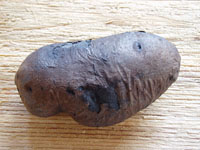
Vaporized potato.

"Vaporized Potato"

to top of page / A/Z index  


Envelope: E-mail © 1998 - 2008     Timothy G. Roufs
Page URL: http:// www.d.umn.edu /cla/faculty/troufs/reference/food.html
Last Modified 06 May 2008
Site Information ~ Main A-Z Index


View Stats