UMD small logo.   UMD
 Skip to the Contents  A B C D E F G H I J K L M N O P Q R S T U V W X Y Z
Week: 01 . 02 . 03 . 04 . 05 . 06 . 07 . 08 . 09 . 10 . 11 . 12 . 13 . 14 . 15 . 16

Other Important Search Links
search food on JSTOR
BBC Food
Wikipedia: Food | Food and drink | Food culture | Food history | Food Portal |
Wikipedia Categories: Food and Drink | History of Food and Drink | Historical Foods |
World Clock Cf.: Food Production and Animal Slaughter
FoodPressReleases.com

Food and Drug Administration Wire

OWL logo, Online Writing Lab, Purdue University.

Envelope: E-mail
Other Google Searches:
Recreation > Food
Business > Food and Related Products
Business > Hospitality > Food Service >
Business > Hospitality > Food Service | Restaurant Chains
  Home > Consumer Information > Food and Drink
Home > Cooking
Science
> Technology > Food Science
Shopping > Food
  Shopping > Health > Nutrition
Society > Issues > Environment > Food and Drink
Society > Law > Legal Information > Food Law
Society > Life Choices > Vegetarianism

Sicilian ice-cream in a bread bun. A good solution to a local problem: the Mediterranean heat quickly melts the ice-cream, which is absorbed by the bread.
"Palermo, Sicily, Italy
has the best gelato in the world"
-- Willie Henderson

Anthropology of Food

On-Line Resources

Spring 2010 Calendar

Summer Session 2010 Calendar
(06/07/2010 - 07/02/2010)

AFforum

World Clock Time
World Clock Events

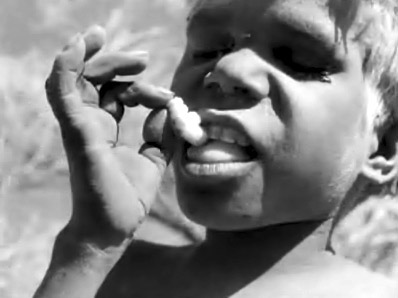
Desert People, boy eating "grub worm"
Eating a"grub worm"
Video: Desert People
Australia
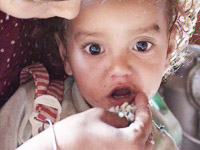
A Fistful of Rice.
A Fistfull of Rice
Nepal
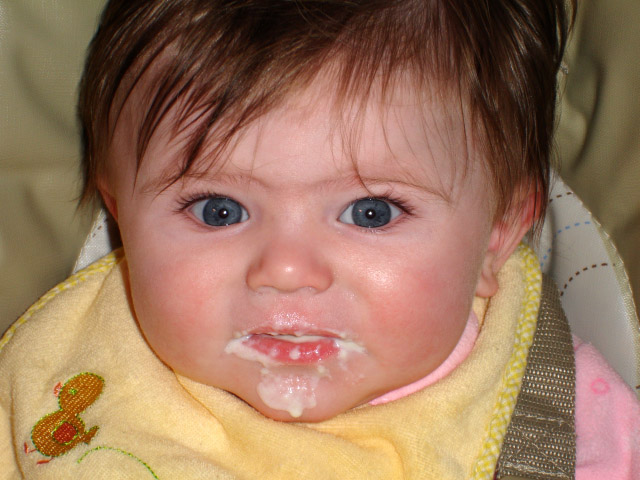
Claire Kathleen Roufs eating first food at 5 months.
Claire Kathleen Roufs
First solid food, rice (isn't as handy as the original)
5 months old
Duluth, MN, U.S.A.
Eating rat.
Video:"Eating Rat at the New Year"
Vietnam
View Other National Geographic Film Clips
to top of page / A/Z index   to top of page / A-Z index

Midsemester Exam

Essay Exams


Blue book for exams.


General Information

How to write an essay exam
OWL (Online Writing Lab) Purdue.
Purdue University Online Writing Lab


Check your grade on the web at eGradebook

Use "The Curve" to figure out your letter grade

     ~ "The Strike Zone"


Criteria for Grading College Papers


Makeup Exams


Academic Integrity Policies


Incompletes

General Information

  • [an error occurred while processing this directive]
  • The Midsemester exam will be an open-book essay exam

    • Essay exams usually provide a better learning experience and, in addition, afford practice in writing

    • This is an open-book exam

      • You may bring and use your texts, dictionary, thesaurus, a writing handbook, class handouts, notes, outlines, drafts, and memos

      • You may also use references and materials from your other classes, with the caveat, of course, that you properly cite any sources you use

      • You may bring and use your laptop

        • but you must upload your exam to your WebDrop folder at the end of the exam period
          <https://webdrop.d.umn.edu>

        • REM: Be sure to have your batteries charged

        • Please be prepared to upload the entire exam as one file, if you can, including the optional take-home question if you choose to do that question

        • NOTE: It does not work simply to type in the .rtf extension on an existing .wps file. You must load the original document and then resave it as a .rtf file type

          .

to top of page / A/Z index   to top of page / A-Z index


Midterm Exam

  • The Midterm exam will cover materials up to and including Day (11) of Week 06
    • This includes the lecture materials, in-class videos, E-mails, the AFforum, the basic introductory materials of the texts, and the text and class materials on tba:

      • tba

    • This is an open-book exam

      • You may bring and use your texts, dictionary, thesaurus, a writing handbook, class handouts, notes, outlines, drafts, and memos

      • You may also use references and materials from your other classes, with the caveat, of course, that you properly cite any sources you use

      • You may bring and use your laptop

        • but you must upload your exam to your WebDrop folder at the end of the exam period
          <https://webdrop.d.umn.edu>

        • REM: Be sure to have your batteries charged

        • Please be prepared to upload the entire exam as one file, if you can, including the optional take-home question if you choose to do that question

        • NOTE: It does not work simply to type in the .rtf extension on an existing .wps file. You must load the original document and then resave it as a .rtf file type


Midterm Exam
Sample Exam Questions

See also sample on-line exam at

under construction

SORRY FOR THE INCONVENIENCE

 
Anthropology of Food
Midsemester Exam

to top of page / A/Z index   to top of page / A-Z index


24 November 2009


Answer FOUR (only 4) of the following seven (7) questions. Keep in mind that there is more than one approach you can take in answering these questions. Follow these guidelines:  

Organize your answer before you begin  

Where appropriate, be sure to state:  
 
  • What or who something is
  • Where it occurred or is located
  • Why it is important
  • When it occurred
  • How it happened or how it works
 

State YOUR position or approach clearly  

Cite specific examples or references to support your statements  

Mention problem areas or other relevant materials which you would like to consider further in a more thorough statement. That is, when you're finished with your answer, what major questions are still left unanswered?  

Summarize your argument or discussion  

Where appropriate use materials from more than one region of the world  

Remember that your responses should have a beginning, a middle, and an end  

Do not discuss any topic or country at length in more than one question  


NOTE: On the midter exam there will be seven (7) questions, including the optional take-home exam question. That is to say, on the exam itself there will be a total of 7 questions, and the optional question is one of the seven. If you choose to do the optional question, then you will need to choose three of the remaining questions that are on the exam itself. More than seven qeustions are included below for illustration purposes.


under construction

SORRY FOR THE INCONVENIENCE


1.
Current Affairs:

In the newspaper this week there was an article on X. The following quote summarizes the authors' position:

[quote will be inserted here].

How would you interpret X from the point of view of what you learned in your Anthropology of Food class so far this semester?

This kind of a question will look something like...

One of the BBC South Asia News headlines for Sunday, 15 October 2006, read “ Japan's old, young enough to work: In Japan, an increasing number of older people are deciding that they do not want to leave their jobs at retirement age ” (full story attached). From what you read in Chapter 3 of Anthropology of Food , “The Japanese Garden,” and from what you learned about Japan from the presentation in class, how would you explain this apparent reluctance of Japanese seniors to leave their jobs?

 
2.
There will likely be two or three questions taken from the AFforum, with the actual questions on the exam taken from the current entries on the AFforum. These examples are from past semesters:

In Understanding Global Cultures, 3rd Ed. (Thousand Oaks, CA:SAGE Publications, , 2004), Martin J. Gannon talks about the different types of cultures in terms of "cultural metaphors." Five of the 28 chapters have food as the metaphor:

    • 6. The Turkish Coffehouse
    • 9. Kimchi and Korea
    • 14. The Danish Christmas Luncheon
    • 15. French Wine
    • 29. The Singapore Hawker Centers

How do these different foods, or food related items, shape the nation's culture itself?


From the AFforum, with the actual questions on the exam taken from the current entries on the AFforum. These examples are from past semesters:

tba


From the AFforum, with the actual questions on the exam taken from the current entries on the AFforum. These examples are from past semesters:

Using information from the video on Israel, Heritage: Civilization and the Jews , "Into the Future, 1880-1990s," and the Israel chapter in the textbook, Anthropology of Food , “The Israeli Kibbutzim and Moshavim,” discuss the Israeli/Palestinian conflict in Israel today.


From the AFforum, with the actual questions on the exam taken from the current entries on the AFforum. These examples are from past semesters:

tba

 
3.
tba

This kind of a question will look something like...

tba

Compare and contrast tba

 
4.A.

Compare and contrast a chapter from either The Cultural Feast: An Introduction to Food and Society, 2nd Edition or America's First Cuisineswith the class presentation.

This kind of a question will look something like...

tba

 
4.B. In Chapter X of The Cultural Feast: An Introduction to Food and Society, 2nd Edition, "[chapter title]," the authors talk about X. Pick two cultures [or eras, or ...] and describe how X pertains to them.  
5.
In The Cultural Feast: An Introduction to Food and Society, 2nd Edition, the authors talk about a lot about what they call "X," "Y," and "Z."

For the first part of the semester we have discussed "X, Y and Z." Why do you think X [or Y or Z] is that important to have so much time spent on it.
 
6.
Comparison-Contrast, XY and You:

Discuss X of the Y people (or culture) as discussed in Anthropology of Food. As part of your answer include some discussion on how you are (a) like, and, (b) unlike the Y people with regard to X. Do not select a country for which you were one of the presenter.

This kind of a question will look something like...

Comparison-Contrast,tba:

Discuss tba . As part of your answer include some discussion on how you are (a) like, and, (b) unlike tba with regard to tba.

Comparison-Contrast, Turkish Coffeehouses and You:

Discuss the coffeehouse of the Turkish people as discussed in Understanding Global Cultures. As part of your answer include some discussion on how you are (a) like, and, (b) unlike the Turkish people with regard to where you go to drink recreational beverages.

 
7.
It has been said that X can be understood in terms of Y. Discuss X and Y and indicate what you think the relevance of these might be to modern-day Anthroplogy of Foodl studies.

This kind of a question will look something like...

It has been said that Israel can best be understood in terms of its focus on the kibbutzim. Discuss the role the kibbutzim as it is "intertwined with [Israel's] history and values" and food production in the development of the modern Jewish state.


8.
The authors of The Cultural Feast: An Introduction to Food and Society, 2nd Edition, "[chapter title]," use the word / term "X." Discuss the concept of "X" as the authors use it in The Cultural Feast: An Introduction to Food and Society, 2nd Edition. Be sure to include examples in your discussion.

This kind of a question will look something like...

The authors in The Cultural Feast: An Introduction to Food and Society, 2nd Edition, "[chapter title]," talk about [X], discusses X. Compare and contrast X with Y.

 
9.
In class, during the first part of the semester, we spent a lot of time discussing X. Why did we spend so much time on that?

This kind of a question mght take several forms, one of which would be something like...

Thailand is 95% Buddhist, India is 81% Hindu, Saudi Arabia is almost 100% Muslim, Turkey is 99.8% Muslim, Brazil is 80% "nominal" Roman Catholic, and Poland is 95% Roman Catholic.

Japan is 50% Buddhist, and Korea is 49% Christian, 47% Buddhist, and 3%, Confucianist (Confucius was the 5th-6th century Chinese philosopher and teacher now known for his little sayings of wisdom; "Confucius says. . . . ").

In other words, all of these countries are strongly dominated by a single religion, except for Japan and South Korea (where only half of the country belong to one religion).

Discuss how the presence of a dominant religion affects the food practices of these countries.

 
10.
tba  
11.
Sophie D. Coe in America's First Cuisines discusses X. What do you think of X and how does it compare with Y?

This kind of a question will look something like...

Sophie D. Coe in America's First Cuisines discusses "The Maya and the Explorers." How does the Mayan experience with "the explorers" compare with the experiences of the Aztecs? How did that affect the exchange of food and information on food between "the explorers" and the people themselves

 
12.

Relate the study of any one nation so far considered in your Anthropology of Food class with what you are studying in one of your other classes, either one that you are presently taking or one that you have taken in the past. Be sure to include specific information in your answer.

 
13.

optional take-home question

NOTE: Essentially you may make up ONE question total. You may either do that as a take-home and bring it to class with you, or you may do that in class the day of the exam. If you elect to do the optional take-home exam and bring it with you to class, then you must choose three (3) additional of the remaining questions presented on the actual exam, as they are presented on the exam.

If you have submitted an Extra Credit report or paper, your optional question must be on a topic other than that of your Extra Credit project(s).

If you do not like these questions, make up and answer a question of your own choice relating to a topic having to do with Anthropology of Food which you have not considered in your other answers and concerning a topic related to the materials covered in class up to the midterm exam. (If you think these questions are fantastic but simply prefer to make up one of your own, go ahead.)

Answers should contain specific information supporting your position. Both your question and your answer will be evaluated.

If you elect to make up and answer a question, you may prepare your question and answer in advance and bring them with you to the exam. If you prepare your question and answer in advance you only need to answer three (3) other question in class.


  OTHER EXAMPLES  
 

A Qustion About a Specific Country:

This kind of a question will look something like...

Ireland:

tba

For purposes of this question, should you choose to answer it, tba


A Question Pertaining to Methods:

This kind of a question will look something like...

Methods:

Anthropologists often use X as an analytical tool in studying the Anthropology of Food. Discuss the various kinds of X techniques, using two or more specific examples to explain each type.

Methods:

In the first week of class it was mentioned that X (tba) is important to Anthropology of Food. As was also mentioned during the first week of class, many countries are having problems, or expect to have problems, relating to X. In tba, Minnesota Public Radio carried a brief story about X , viz., that X. According to the MPR story, X. 

tba additional information

From what you have learned so far in class, how would you interpret all of this information?


Comparison-Contrast of Two Specified tba:

This kind of a question will look something like...

Comparison-Contrast, X / Y:

Ch. N of The Cultural Feast: An Introduction to Food and Society, 2nd Edition discussed "X"; Ch. N of America's First Cuisines discusses X discussed "Y and Z."

Compare and contrast X and Y and Z in terms of what you have learned from the videos, these chapters, and the class presentations on these countries.


Comparison-Contrast of Two Specified tba:

This kind of a question will look something like...

Comparison-Contrast, tba / tba:

In this segment of the course tba.   Compare and contrast X and Y in terms of their musical metaphors.


to top of page / A/Z index   to top of page / A-Z index

This course is governed by the . . .

UMD Student Academic Integrity Policy

Office of Student Behavior > UMD Student Academic Integrity Office

<www.d.umn.edu/assl/conduct/integrity>

"Academic dishonesty tarnishes UMD's reputation and discredits the accomplishments of students. UMD is committed to providing students every possible opportunity to grow in mind and spirit. This pledge can only be redeemed in an environment of trust, honesty, and fairness. As a result, academic dishonesty is regarded as a serious offense by all members of the academic community. In keeping with this ideal, this course will adhere to UMD's Student Academic Integrity Policy, which can be found at www.d.umn.edu/assl/conduct/integrity. This policy sanctions students engaging in academic dishonesty with penalties up to and including expulsion from the university for repeat offenders." -- UMD Educational Policy Committee, Jill Jensen, Chair (08/16/2007)

and the

UMD Conduct Code:

<http://www.d.umn.edu/catalogs/current/umd/gen/conduct.html>

<http://www.d.umn.edu/assl/conduct/code/>

"The instructor will enforce and students are expected to follow the University's Student Conduct Code (http://www.d.umn.edu/assl/conduct/code). Appropriate classroom conduct promotes an environment of academic achievement and integrity. Disruptive classroom behavior that substantially or repeatedly interrupts either the instructor's ability to teach, or student learning, is prohibited. Disruptive behavior includes inappropriate use of technology in the classroom. Examples include ringing cell phones, text-messaging, watching videos, playing computer games, doing email, or surfing the Internet on your computer instead of note-taking or other instructor-sanctioned activities." -- UMD Educational Policy Committee, Jill Jensen, Chair (08/16/2007)

Up  
to top of page / A-Z index


Envelope Image © 1998 - 2010 Timothy G. Roufs
Page URL: http:// www.d.umn.edu /cla/faculty/troufs/anthfood/afexams_midterm.html
Last Modified 30 May 2009
Site Information ~ Main A-Z Index


View Stats