su2025 Live Chat for Picking a Project Topic
Week 2, Tuesday, 17 June 2025, 7:00-8:00 CDT Sign in on .
These are optional. If you can not make them live e-mail or e-Zoom.
su2025 Project's formalPromissory Abstractand Working Bibliography (up to 20 points) due by Sunday, 6 July 2025 . . . or soon thereafter (submit them together)
NOTE: Folks who look mostly at web sites and/or sources like Wikipedia sometimes find it difficult to write 8-10 pages of quality text. If you find that you are in that position, try researching the topic in a book focusing on your topic. Many are recommended in the class WebPages.
double-spaced
with one-inch margins all around
with body type font 11 or 12
illustrations, tables, figures, diagrams . . . may be included, but must be properly placed and cited
Professional (formal) papers often have a Summary Abstract, which appears at the beginning of the work. The abstract you did earlier for this paper is a Promissory Abstract which indicated what you planned or expected to do. They are different.
A Summary Abstract is written after you have completed your paper and should reflect the important points of your paper.
For this paper including an abstract is optional. If your overall tone of writing is very formal, you might consider including an abstract. If you do include an Abstract in your paper, it should be a Summary Abstract and not the abstract you prepared earlier for this paper.
Monthly On-line newsletter of the Central States Anthropological Society, or the monthly newsletter of the professional society of your major(s) [for example, Sociologists of Minnesota]
Purpose (Rhetorical)
To let them know what you were working on, and what you found out, and what might be interesting to look at in the future
Style
for the Presentation, it may be informal
for the Paper, formal academic
It is permissible, even desirable, for you to include your own well-informed personal opinions in a formal academic term paper
Be sure to back up personal opinions and interpretations with well-reasoned and supported arguments
Generally formal term papers are not written in the first person, but if you have a topic-related reason to do so, it is perfectly acceptable
NOTE: Try to work an analytical section into your Presentation and Paper, and at least think about approaching your Anth of Food term Project from the traditional "four-fold" approach of American Anthropology. If the "four-fold" approach does not work as a major appoach, consider at least addressing in summary form the relationship of your chosen topic(s) to traditional American Anthropology.
When relevant to your topic be sure to work in what is happening now; that is, where appropriate, relate it to current affairs
Term Paper Format
doublespaced
with one-inch margins all around
with body type font 11 or 12
illustrations, tables, figures, diagrams . . . may be included, but must be properly placed and cited
Term Paper Citation Conventions (How to cite your references)
The Writers' Workshop offers free one-to-one writing support to all members of UMD's campus community. Sessions are held synchronously online or in-person with a graduate student or faculty consultant. Feel free to bring any writing project at any stage in the writing process. To make an appointment, visit d.umn.edu/writwork or stop by the Workshop’s front desk located on the second floor of Martin Library and visit with the helpful staff.
Students in this class have permission to see a Writers’ Workshop consultant for assistance on exams, and all written projects.
Tutoring Center
The Tutoring Center on the second floor of Martin Library offers free tutoring sessions for this course. Your tutor will be a high-achieving student trained to assist you. To learn more about the Tutoring Center, find the tutor(s) qualified for this subject area, or reserve a time with a tutor, please visit the Tutoring Center website. The tutors look forward to working with you!
Research Help is a service where librarians provide guidance, support, and instruction on how to find and use information. You can meet with a librarian when you’re not sure how to get started with a research project, when you’ve hit a wall in your research, or your usual process isn’t working. You can chat with a librarian 24/7, schedule an appointment with a subject librarian, email, or drop-in during the day.
Your "Class Project" consists of a focused term paper and a presentation on what you discovered / learned while working on the paper. It is recommended that you do your term paper and your class presentation on the same subject.
For your Class Project select a topic that you are interested in and that relates to the Anthropology of Food.
NOTE: Weeks 2 and 3 there will be a "Live Chat" to help you pick a topic for your class Project. Try to make those if you can, but if you can not, the "live Chats" are transcribed so that you can review the transcriptions after the "Live Chats" are over.
Please feel free also to stop by Cina 215 if you are in the neighborhood, or to email troufs@d.umn.edu with your questions and/or observations.
It is fine for you to begin a project by consulting with Wikipedia (and similar on-line sources of encyclopaedic-type information) but you should be aware that the Wikipedia entries are open-source and are not checked and verified in the same manner as other reference materials.
And sometimes the entries are confusing (have a look at "Macedonia," for example).
And Wikipedia, should you use it, should only be a starting point.
For a college research paper you should also have a look at other references, either traditional materials from the library, or on-line materials from sources like UMD E-Journal Locator, JSTOR, etc., or books and manuscripts On-Line. That is to say Wikipedia and the other reference-type sources listed should not be your only source of information. And you must add your own evaluations, comparisons, development, criticisms, critiques, and the like to any reference materials used. Simply cutting and pasting information from sources is not sufficient to satisfy the requirements of either a required or extra-credit research paper.
Your paper should reflect a synthesis and evaluation of materials researched.
For your paper you should also use traditional library materials, and, where appropriate, interviews and videotapes.
Try getting more information by looking at sites on the web:
Try surfing the web by searching with the search engines found by clicking on the Web "Search" button found on the upper righthand corner of the course WebPages. This will take you to the course Search Engines Page.
Hint: When you do a search on an item that has more than one word, like "stone tools," use the "Advanced Search" option and enter the words in the "exact phrase" box -- otherwise it will search out everything with "stone" and everything with "tools," and the list of "hits" could get quite large.
Your topic/subject should be something that you, personally, are interested in
Your topic/subject can be almost anything you like, but it must be related to the Anthropology of Food course
Use materials from the textbook, class slides, and class videos--as a starting point to integrate class materials into your Project.
Butthe main focus of your project should be on materials that are not required for the class.
The informal "proposal" itself can be very straightforward:
The Informal Proposal is a simple statement (preferably in a Word document) of . . .
"Here's what I'm interested in doing. . . ."
"Here's why I'm interested in that. . . ."
"Here's what I think will be useful for that project. . . ."
"What do you think?"
Or
. . .
Your Informal Proposal can be something like . . .
"I'm thinking about doing a project on X or Y, but can't make up my mind."
"Here's what I'm interested in, and why. . . ."
Here are some things that look like they might be useful for the project. . . ."
"What do you think?"
"What I think will be useful" means that you should include 3 or 4 items like references to materials and activities (such as interviewing someone . . .) that you think would be helpful to your in working on your project. (No, you do not have to do an interview; that's just one possibility.)
"Items" can be articles, short videos, photographs, books, interviews, personal experience. . . .
If you include a reference to a source on the web, be sure to give its full reference (not just the URL). For a web page your full reference should look something like the one below (include as much of this material as is available for the site[s] you are looking at):
For this assignment you may turn in the references to other sources of information any way you like, but it is a good idea to use whatever attribution system you plan to use in your presentation:
In order to upload your file please make sure that you save your Word file as a .docx or a .doc or a .rtf file.*
*Details on "Type of Files" are available in the "File Type Information" if you need more information on how to save your files on your computer.
Click on "upload assignment" button at the end of the assignment page.
Once you have uploaded the file you can not re-upload the file unless you first remove the one you first uploaded.
For more information regarding how to use the assignment tools, please view the Canvas Student User Guides
A more formal statement (a "Promissory Abstract") of what you eventually decide upon isn't due for another two weeks.
Between now and then I will have a look at your informal proposal and give you some feedback on it, including instructions on how to proceed with your Promissory Abstract.)
su2025 Project's formalPromissory Abstractand Working Bibliography (up to 20 points) due by Sunday, 6 July 2025 . . . or soon thereafter (submit them together)
This proposal
can be fairly simple, and informal, including . . .
a basic informal statement of one or more topics that you are interested in writing about . . .
there is no minimum length, but most people submit two or three paragraphs
one paragraph should include including basic information the topic itself
one paragraph should include information about why you are interested in the topic(s)
and a third paragraph, or section, of your informal proposal should include
three or four sources (or more), and statements about why you think those sources might be helpful in researching the topic(s)
It may be more elaborate if you wish.
But this proposal may also be simple and informal
do try to work an analytical section into your final paper that reflects the four-fold nature of anthropology (see Week 1)
REM: make sure your paper—whatever else it may focus on—relates to (and includes discussion of the relevance of the topic to)
the Anthropology of Food
Audience: Classmates
Purpose (Rhetorical): To get started thinking about . . .
the person(s) you might want to look at for your Anthropology of Food Project
Format: This proposal statement can be in informal format, but if you use a formal format, use any standard format and citation convention (APA, MLA, Turabian-Chicago . . . ). Don't make up one of your own. and citation convention (APA, MLA, Turabian-Chicago . . . )
doublespaced
with one-inch margins all around
with body type font 11 or 12
illustrations, tables, figures, diagrams . . . may be included, but must be properly placed and cited
su2025 Project's formalPromissory Abstractand Working Bibliography (up to 20 points) due by Sunday, 6 July 2025 . . . or soon thereafter (submit them together)
The "working bibliography" for your project is a simple list of references—sources that you think will be helpful to in putting together your paper and your presentation. (grading information for working bibliography)
And your sources may include any or all of the following kind of items . . .
traditional library printed materials (books, journals, magazines, government reports, microformat materials . . .)
materials on this website listed alphabetically in the A-Z index (on your Home page and on all of the course free-standing WebPages) ABCDEFGHIJKLMNOPQRSTUVWXYZ
At the start of your project it is probably a good idea to have 6-10 sources that "look pretty good" and as if they might be useful to your project.
At the beginning, and for the list you turn in during Week 6, you do not have to do anything more than list the resources that you think will be helpful to your project and that you expect to use for your paper and/or your report.
Once you begin looking at these materials, you may want to start annotating them—that is, beginning to make notes about how they might actually be used in your paper and/or presentation.
And you might start noting additional references from your original list of items.
For details on evaluating the items on your initial "working bibliogaphy",
and on the process of annotating your working bibliography (your simple list),
see the resources available from . . .
Format: This proposal statement can be in informal format, but if you use a formal format, use any standard format and citation convention (APA, MLA, Turabian-Chicago . . . ). Don't make up one of your own. and citation convention (APA, MLA, Turabian-Chicago . . . )
doublespaced
with one-inch margins all around
with body type font 11 or 12
illustrations, tables, figures, diagrams . . . may be included, but must be properly placed and cited
Format: This proposal statement can be in informal format, but if you use a formal format, use any standard format and citation convention (APA, MLA, Turabian-Chicago . . . ). Don't make up one of your own. and citation convention (APA, MLA, Turabian-Chicago . . . )
doublespaced
with one-inch margins all around
with body type font 11 or 12
illustrations, tables, figures, diagrams . . . may be included, but must be properly placed and cited
s2025 Wk 14 Term Paper (up to 400 points) due by Sunday, 27 April 2025.
AVISO: Late Term Papers will not be accepted unless (1) arrangements for an alternate date have been arranged in advance, or (2) medical emergencies or similar extraordinary unexpected circumstances make it unfeasible to turn in the assignment by the announced due date. Why?
Every student will write and submit their own term paper.
If appropriate, you may collaborate with others for your presentations.
For your footnotes, "bibliography" ("Works Cited"
or "References"), and other matters like that, use either the APA (American
Psychological Association) citation style, the MLA (Modern Language
Association) style, the CMS (Chicago) style, or the CBE (Council
of Biology Editors) style. Don't make up your own.
Put your paragraph(s) summarizing your paper here.
Put a transitional statement here.
Body
[Give this section an interesting subtitle, something other than "Body"]
Describe and discuss your chosen topic(s) here. Use some form of organizational structure. The "Journalist's Questions," Who,What, When, Where, How and Why are often helpful. A time sequence is also useful.
Use the Paradigm Online Writing Assistant if you do not have much experience writing college papers.
When relevant to your topic be sure to work in what is happening now; that is, where appropriate, relate it to current affairs.
With your Presentation be sure to relate your Project materials to the materials considered in class.
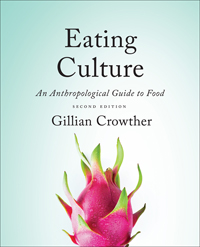
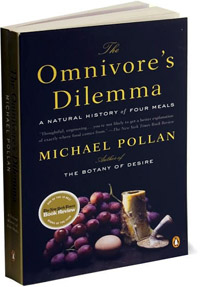
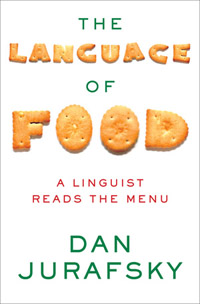
For e.g., if you are doing a project on the role of fire/cooking in prehistoric times include relevant items fromEating Culture, 2nd Edition, The Omnivore's Dilemma, and/or The Language of Food . . .
and from the relevant class slides, for e.g., from Diet and Human Evolution: Introduction
slides: (.pptx)
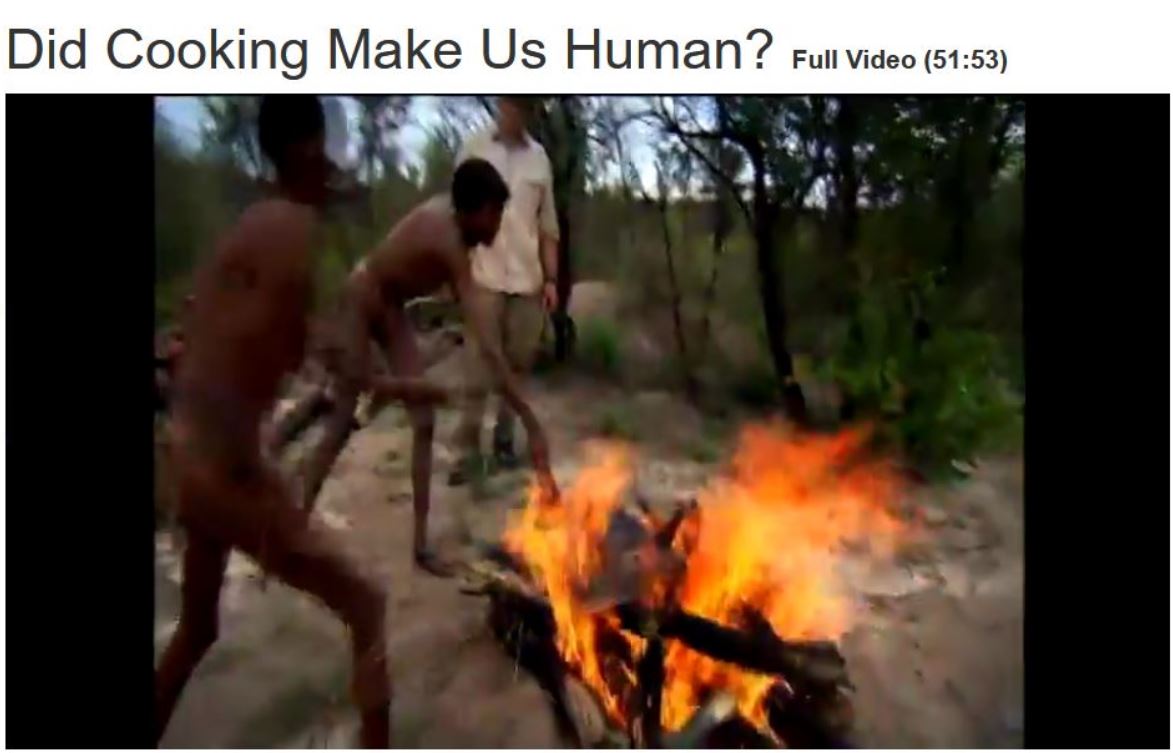
and from the relevant class film(s), for e.g., from Did Cooking Make Us Human?
Use of AI-content generators for assignments in this class
When I taught Advanced Writing for the Social Sciences here at UMD, for over twenty-five years, my rule of thumb advice to students was to plan to spend 60% or more of their time and effort revising drafts (for academic type writing).
In 2001 Wikipedia appeared on the scene and very quickly became a useful tool asa starting point for many academic projects even though as an open-source resource the Wikipedia entries are not checked and verified in the same manner as other traditional reference materials.
Spelling and grammar checkers arrived on the general scene and helped with spelling and grammar checking, but, as you no doubt have discovered, they continue to require human editing.
And, of course, before that we had a selection of excellent Encyclopedia offering good starting points for many projects, the most popular being The Encyclopedia Brittanica.
And long before that there were libraries--since at least the days of Alexandria in Egypt, in the third century B.C.
The bottom line . . .
Today the evolution of research resources and aids continues with the relatively rapid appearance of ChatGPT and other automated content generators.
As many folks have already found out, they can be very useful as starting points, much like their predecessors. But, from the academic point of view, they are still only starting points.
Professors nationwide are for the most part advised, and even encouraged, to experiment with the potentials of ChatGPT and similar apps.
In this class it is fine to experiment, with the caveat that all of your written academic work demonstrates that your personal efforts—including content development and revision—reflect your personal originality, exploration, analysis, explanation, integrating and synthesizing of ideas, organizational skills, evaluation, and overall learning and critical thinking efforts.
That is to say you may experiment with the AI tool to do tasks such as e.g, brainstorming, narrowing topics, writing first drafts, editing text, and the like. AI-generated works should in no case be more than that.
In the end you need to become familiar enough with the various subjects, peoples, and places discussed in this class to research a topic and problem-solve on your own, and carry on an intelligent conversation about them in modern-day society . . . a conversation that goes byond your voicing an unsupported opinion.
For the record, what follows is the official UMD Academic Integrity Policy. Note that "unless otherwise noted by the faculty
member" this is the default policy.
"UMD’s Academic Integrity policy covers any work done by automated content generators such as ChatGPT or other generative artificial intelligence tools unless otherwise noted by the faculty
member. These tools present new challenges and opportunities."
"Within the confines of this
class The use of AI-content generators is strictly prohibited for any stage of homework/assignment
(e.g., draft or final product). The primary purposes of college are developing your thinking skills,
being creative with ideas, and expanding your understanding on a wide variety of topics. Using
these content generating AI tools thwarts the goal of homework/assignments to provide
students opportunities to achieve these purposes. Please make the most of this time that you
have committed to a college education and learn these skills now, so that you can employ them
throughout your life." -- Jennifer Mencl, UMD Associate Vice Chancellor, Academic Affairs, 10 May 2023
. "Academic dishonesty
tarnishes UMD's reputation and discredits the accomplishments of
students. UMD is committed to providing students every possible
opportunity to grow in mind and spirit. This pledge can only be
redeemed in an environment of trust, honesty, and fairness. As a
result, academic dishonesty is regarded as a serious offense by all
members of the academic community. In keeping with this ideal, this
course will adhere to UMD's Student Academic Integrity Policy, which
can be found at [http://www.d.umn.edu/conduct/integrity/Academic_Integrity_Policy.htm].
This policy sanctions students engaging in academic dishonesty with
penalties up to and including expulsion from the university for repeat
offenders."
— UMD Educational Policy Committee, Jill Jensen, Chair
(08/16/2007)
The instructor will enforce and students are expected to follow the University's Student Conduct Code [http://www1.umn.edu/regents/policies/academic/Student_Conduct_Code.html].
Appropriate classroom conduct promotes an environment of academic
achievement and integrity. Disruptive classroom behavior that
substantially or repeatedly interrupts either the instructor's ability
to teach, or student learning, is prohibited. Disruptive behavior
includes inappropriate use of technology in the classroom. Examples
include ringing cell phones, text-messaging, watching videos, playing
computer games, doing email, or surfing the Internet on your computer
instead of note-taking or other instructor-sanctioned activities."
— UMD Educational Policy Committee, Jill Jensen, Chair
(08/16/2007)
Failure to comply with the above
codes and standards when submitting an Extra Credit paper will result in
a penalty commensurate with the lapse, up to and including an F final grade for the course, and, at a minimum, a reduction in total
points no fewer than the points available for the Extra Credit project.
The penalty will not simply be a zero for the project, and the
incident will be reported to the UMD Academic Integrity Officer in the
Office of Student and Community Standards.
A Note on "Cutting and Pasting" without the Use of Quotation Marks (EVEN IF you have a citation to the source somewhere in your paper)
If you use others' words and/or works you MUST so indicate that with the use of quotation marks. Failure to use quotation marks to indicate that the materials are not of your authorship constitutes plagiarism—even if you have a citation to the source elsewhere in your paper/work.
Patterned failure to so indicate that the materials are not of your own authorship will result in an F grade for the course.
Other instances of improper attribution will result in a 0 (zero) for the assignment (or a reduction in points equal to the value of an Extra Credit paper), and a reduction of one grade in the final grade of the course.
All incidents will be reported to the UMD Academic Integrity Officer in the
Office of Student and Community Standards as is required by University Policy.
Use of AI-content generators for assignments in this class
When I taught Advanced Writing for the Social Sciences here at UMD, for over twenty-five years, my rule of thumb advice to students was to plan to spend 60% or more of their time and effort revising drafts (for academic type writing).
In 2001 Wikipedia appeared on the scene and very quickly became a useful tool asa starting point for many academic projects even though as an open-source resource the Wikipedia entries are not checked and verified in the same manner as other traditional reference materials.
Spelling and grammar checkers arrived on the general scene and helped with spelling and grammar checking, but, as you no doubt have discovered, they continue to require human editing.
And, of course, before that we had a selection of excellent Encyclopedia offering good starting points for many projects, the most popular being The Encyclopedia Brittanica.
And long before that there were libraries--since at least the days of Alexandria in Egypt, in the third century B.C.
The bottom line . . .
Today the evolution of research resources and aids continues with the relatively rapid appearance of ChatGPT and other automated content generators.
As many folks have already found out, they can be very useful as starting points, much like their predecessors. But, from the academic point of view, they are still only starting points.
Professors nationwide are for the most part advised, and even encouraged, to experiment with the potentials of ChatGPT and similar apps.
In this class it is fine to experiment, with the caveat that all of your written academic work demonstrates that your personal efforts—including content development and revision—reflect your personal originality, exploration, analysis, explanation, integrating and synthesizing of ideas, organizational skills, evaluation, and overall learning and critical thinking efforts.
That is to say you may experiment with the AI tool to do tasks such as e.g, brainstorming, narrowing topics, writing first drafts, editing text, and the like. AI-generated works should in no case be more than that.
In the end you need to become familiar enough with the various subjects, peoples, and places discussed in this class to research a topic and problem-solve on your own, and carry on an intelligent conversation about them in modern-day society . . . a conversation that goes byond your voicing an unsupported opinion.
For the record, what follows is the official UMD Academic Integrity Policy. Note that "unless otherwise noted by the faculty
member" this is the default policy.
"UMD’s Academic Integrity policy covers any work done by automated content generators such as ChatGPT or other generative artificial intelligence tools unless otherwise noted by the faculty
member. These tools present new challenges and opportunities."
"Within the confines of this
class The use of AI-content generators is strictly prohibited for any stage of homework/assignment
(e.g., draft or final product). The primary purposes of college are developing your thinking skills,
being creative with ideas, and expanding your understanding on a wide variety of topics. Using
these content generating AI tools thwarts the goal of homework/assignments to provide
students opportunities to achieve these purposes. Please make the most of this time that you
have committed to a college education and learn these skills now, so that you can employ them
throughout your life." -- Jennifer Mencl, UMD Associate Vice Chancellor, Academic Affairs, 10 May 2023



 A-Z index

 site (below).
 assignments.




 Resources



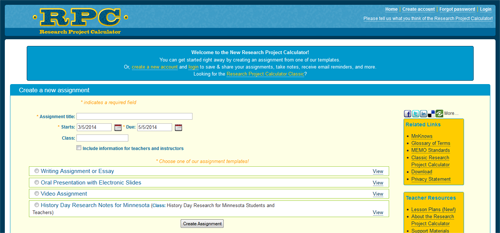
 for information on how to cite
items from the web.
for information on how to cite
items from the web.